Written by Bryan Lutz, Editor at Dollarcollapse.com:
So, every Sunday morning I sit down to write a few short thoughts.
Sometimes these thoughts end up being about life, other times they are on gold, geopolitical issues affecting the markets, or the economy.
Here are three thoughts for this morning:
1. Productivity was real in 1999 too, and stocks still crashed 50%. How far can equities prices go up before the come down?
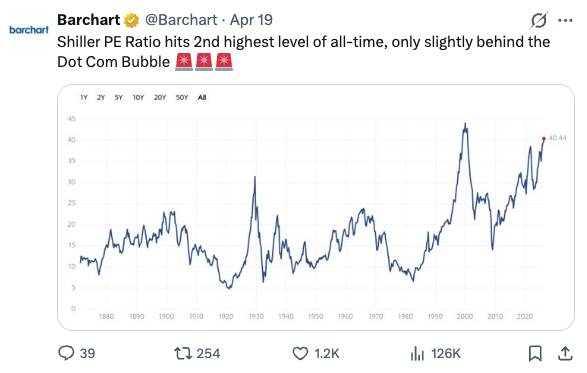
The Shiller PE ratio measures how expensive stocks are by comparing prices to the last ten years of inflation-adjusted earnings.
In others words, it gives you a good idea of what the economy is actually producing versus the price.
The historical average sits near 17.
Today it reads 40, the second-highest level ever recorded, behind only the dot-com peak before stocks crashed fifty percent.
Wall Street’s excuse this time is artificial intelligence, claiming a productivity boom justifies the price.
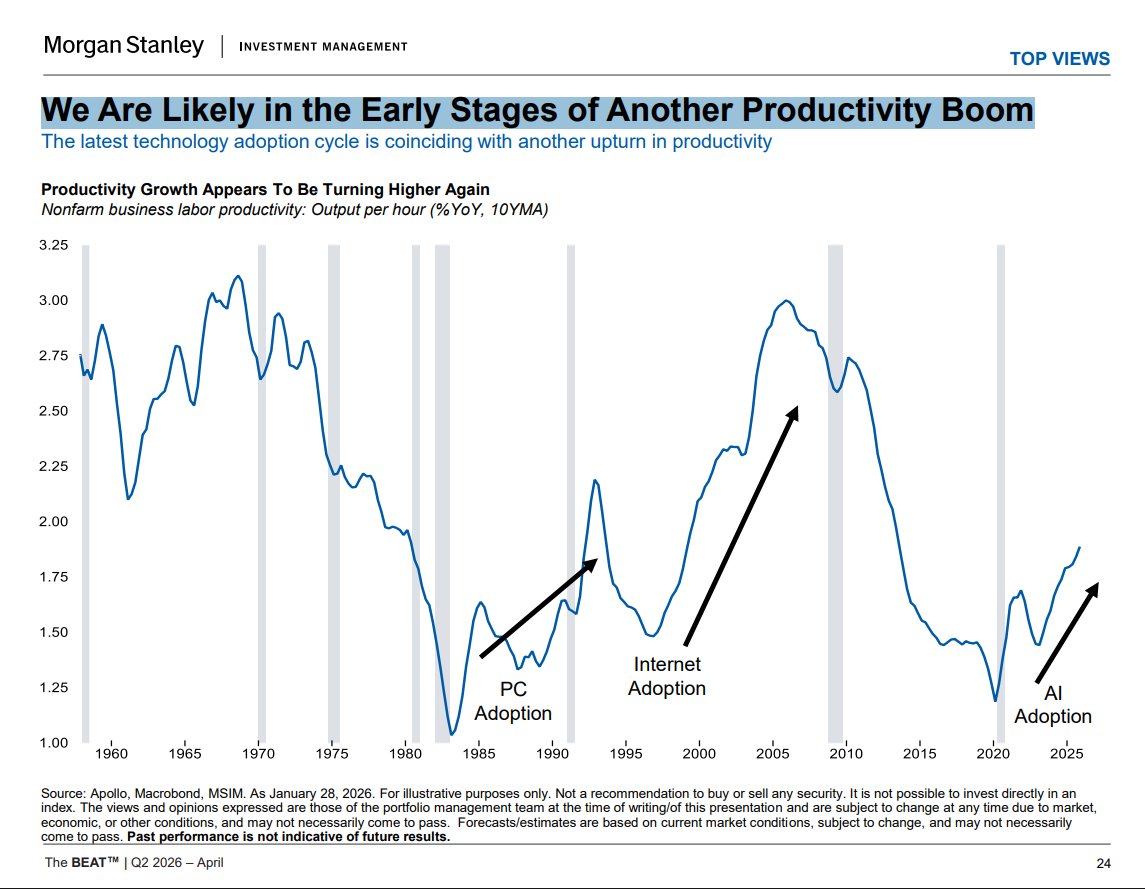
But productivity genuinely rose in the late 1990s too, and investors still got wiped out.
Real technology gains cannot rescue unreal valuations.
How far can equities prices go up before the come down?
2. As America’s monetary and political systems decline, we will see more promises broken and expectations shattered. It will be the same for the incoming Federal Reserve Chairman, Kevin Warsh. Here’s one reason why…
Kevin Warsh pledged a leaner, strictly independent Fed at his confirmation hearing, promising to shrink the balance sheet and restore discipline.
Meanwhile, gold punched through $4,796 an ounce, a glittering vote of no-confidence in his promises. This chart shows why.
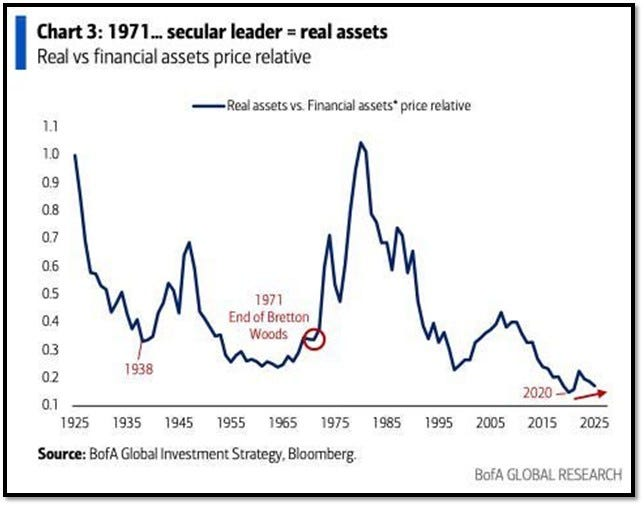
It measures real assets like gold and commodities against financial assets like stocks and bonds. The ratio now sits near a century low, last seen in 1929 and 1971, both moments that preceded massive shifts toward hard assets. Savers no longer trust paper promises, no matter who signs them.
So, macro forces are against Warsh’s vision.
The next secular cycle has already begun, and gold is leading it, which brings us to our next thought for the day.
3. Since you’re here, you, and the smart money already know where this is going.
If gold is leading the next secular cycle, then gold miners are the leveraged bet on that shift, and this chart (via @TaviCosta) shows the smart money has already figured it out.
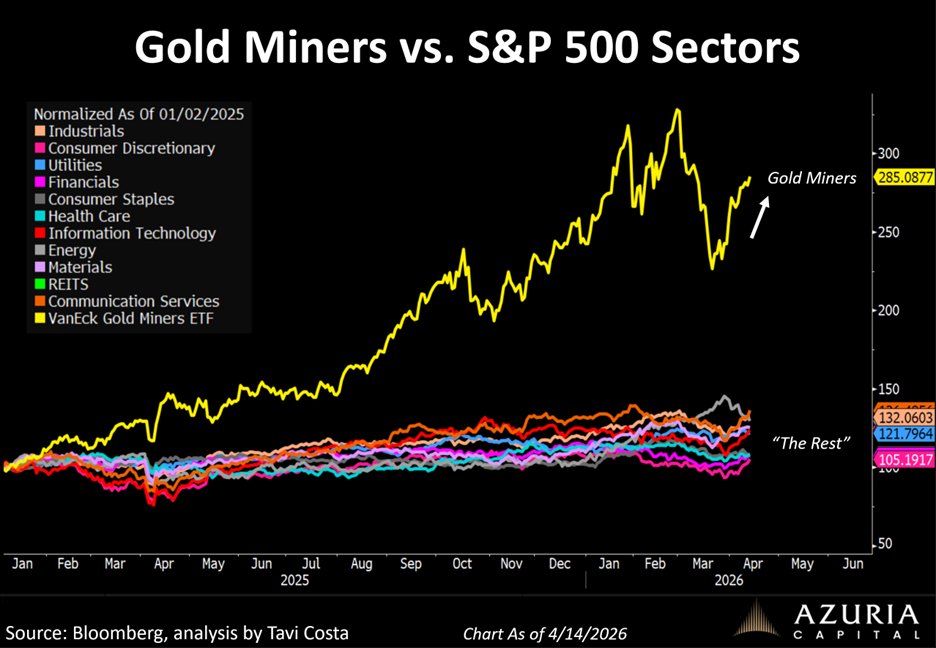
Since January 2025, the VanEck Gold Miners ETF has nearly tripled, gaining roughly 185 percent while every other S&P 500 sector crawls along below 35 percent.
Industrials, tech, utilities, financials, all of them bunched together at the bottom like passengers on the same slow train.
Miners are not following the broader market. They are telling a different story entirely.
Capital is quietly rotating from paper promises into things you can hold.