Written by Bryan Lutz, Editor at Dollarcollapse.com:
Right now two ends of Pennsylvania Avenue are pulling in opposite directions.
Kevin Warsh took the Fed chair on May 22. On June 17 his committee held rates at 3.5 to 3.75 percent, dropped its forecast for a cut, and told markets it will deliver price stability. Higher for longer. Tough on inflation.
That’s what the Fed is talking about, the perceived governor of the markets. Walk around back, to the Treasury building, and the policy reverses. Cash is moving into the bond market, not out of it. The paperwork says so, and control of US Treasury bonds is becoming a tug of war between the Fed and the US Treasury.
The video above makes the case in broad strokes. For the hard number, go to the source. The Treasury’s own Quarterly Refunding Statement, dated May 6, spells out what the desk plans to buy.
U.S. Treasury, Quarterly Refunding Statement
“Treasury anticipates that, over the course of the upcoming quarter, it will purchase up to $38 billion in off-the-run securities across buckets for liquidity support and up to $25 billion in the 1-month to 2-year maturity bucket for cash management purposes.”
— U.S. Department of the Treasury, May 6, 2026
To keep US long-bond yields low, Bessent’s plan has been to buy back the old, illiquid long bonds that banks cannot move, and fund those purchases by selling short-term bills. Buy long. Sell short. That shortens the duration of the national debt and leans on the term premium, the extra yield investors want for holding a thirty-year bond instead of rolling paper every few weeks. The US Treasuries total cash account behind it could swell to $1 trillion by late July.
This is not new. Add up every operation since the program began in May 2024 and the Treasury has bought back more than $425 billion in bonds. Most of it never made the news.
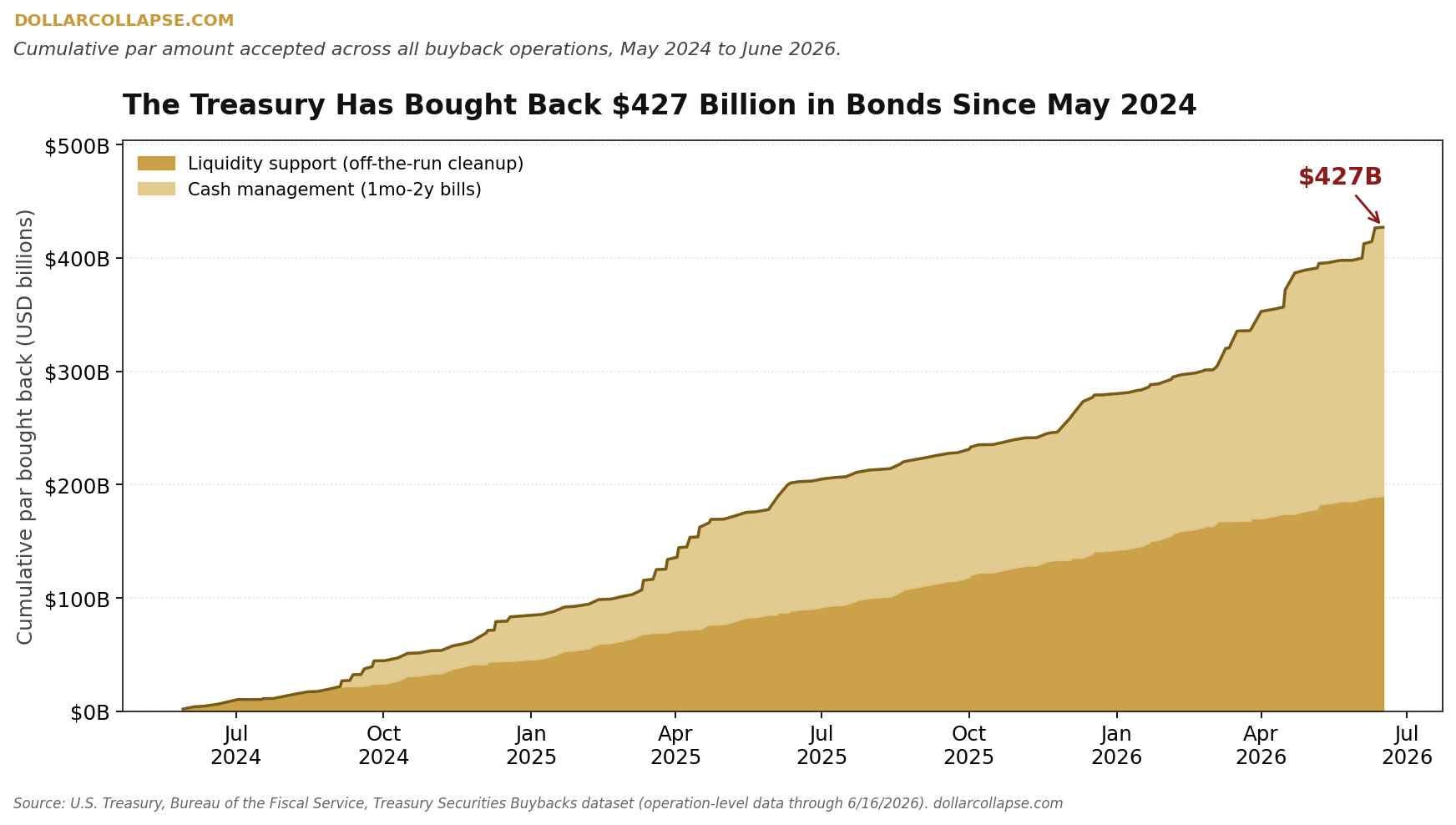
Instead of the Fed shrinking its balance sheet, the Treasury is picking up the bill. One arm of the State pulls the long end down while the other props the short end up.
A normal yield curve is “priced” when buyers and sellers freely set interest rates across different bond maturities based on what they actually think about inflation and risk. It’s “managed” when the government deliberately steps in to move those rates where it wants them: the Fed keeps short-term rates high on purpose, while the Treasury buys up long-term bonds to keep long-term rates lower than they’d otherwise be.
The yield curve you are looking at is managed, not priced.
So the shape of the curve you see isn’t really the market’s honest verdict anymore. It’s the result of two government hands pushing on opposite ends
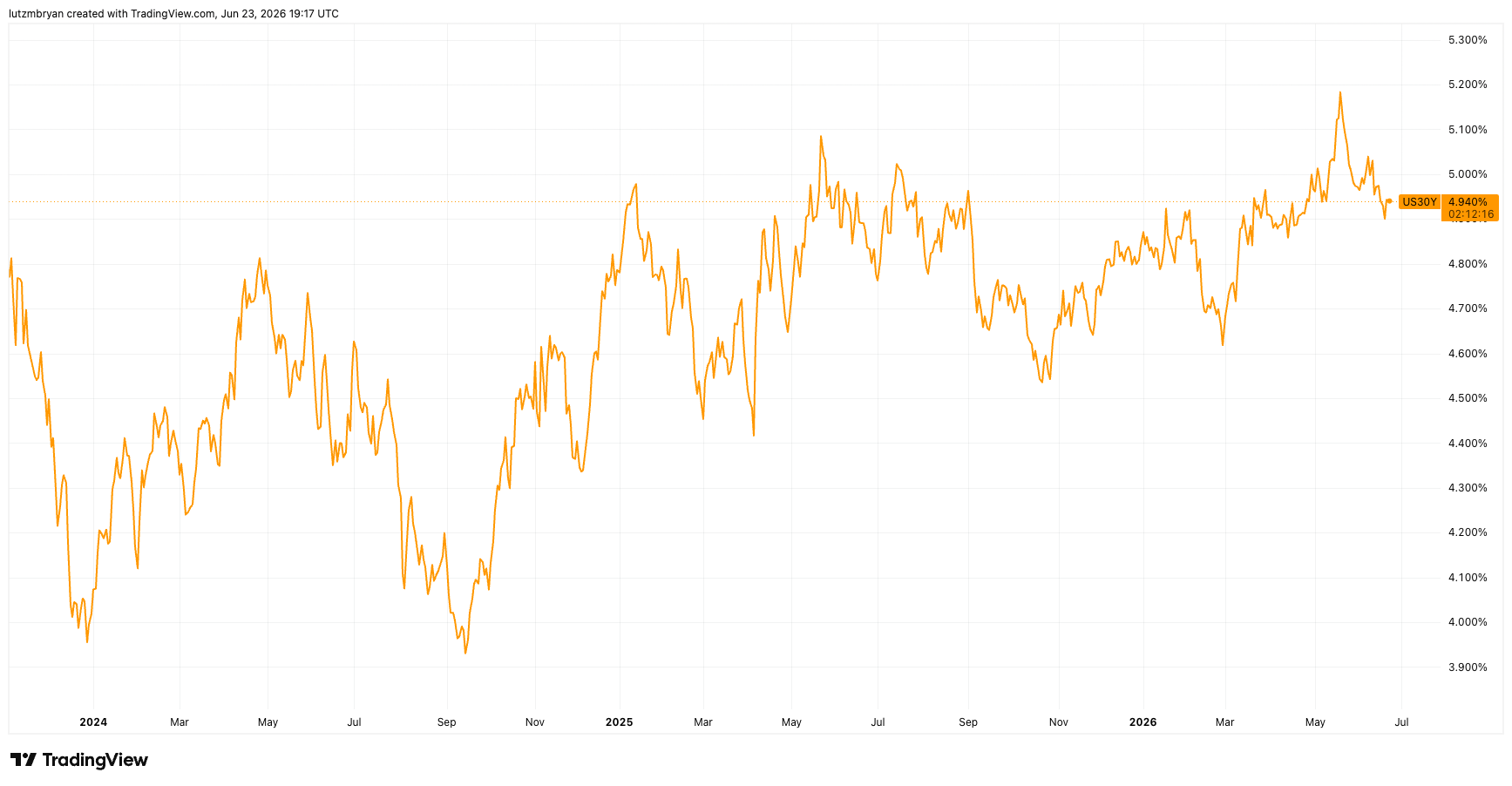
When the government has to hold its own bond market together by hand, that tells you the market would say something different if it were left alone. As long as the Treasury keeps buying and the cash keeps flowing, the long end stays calm and the curve looks under control. But a managed price only lasts as long as the manager has money to spend, and that cash account does not refill itself forever. When the buying slows, the market gets its voice back, and the yields that were held down start telling the truth again.
Gold doesn’t need a buyback desk to set its price, which is the whole point. When a monetary system is designed around gold, it becomes stable and inclusive.
1 thought on “Stealth QE: Easing Through the Back Door of the Treasury Building Is Managing the Price of Debt Instead of the Market”
Talking book is as old as Prostitution!
I’m holding and will not sell 1 Gram going forward until honest price discovery is present! Even then I’d be hesitant to sell into a fiat market that stinks worse than a basket of week old Fish!!!