Written by Bryan Lutz, Editor at Dollarcollapse.com:
It’s Sunday.
Alright, here’s what we do.
Every Sunday I share a few thoughts with you and other subscribers at Dollar Collapse.
Sometimes we’ll talk about economics, sometimes recent events, and other times, life.
Here are three thoughts for this morning:
1. Over the past several weeks we’ve seen the gold price slide, but gold ETF holders don’t seem to believe it.
Gold has slid from around $4,650 to about $4,100 over the past few weeks.
You’d expect ETF holders to bail…
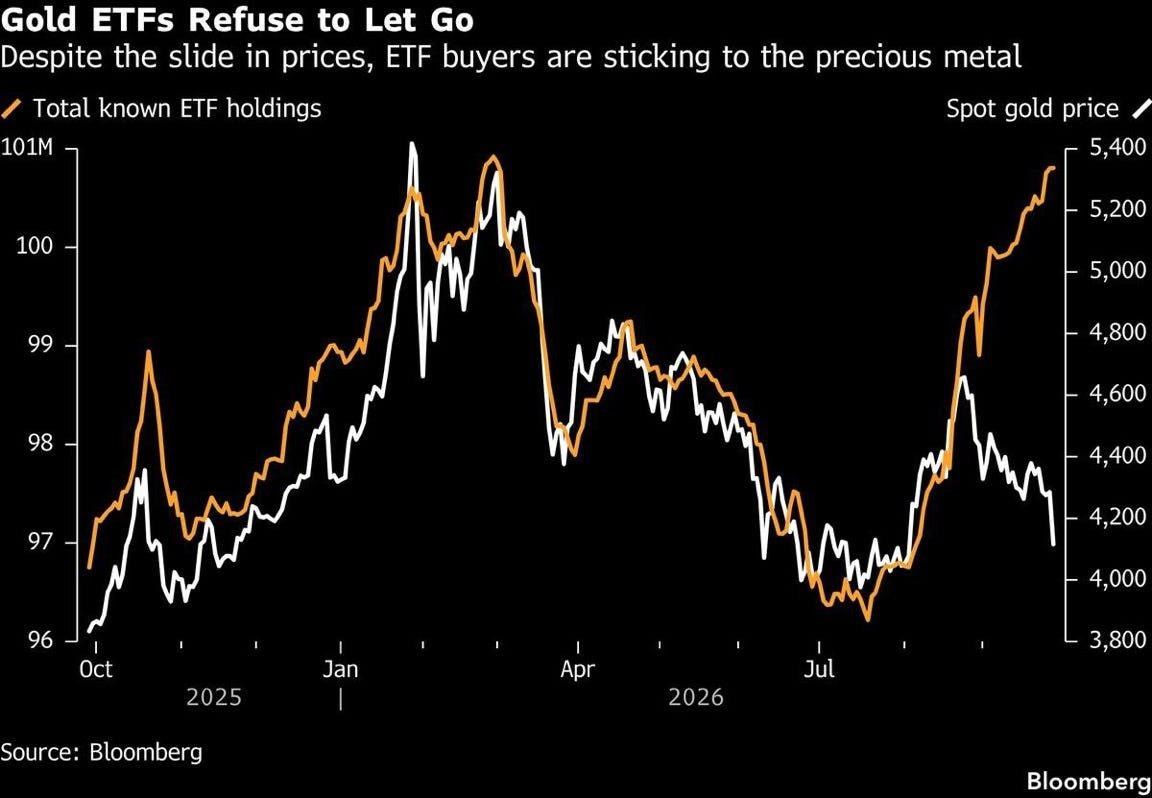
Instead, total known holdings kept climbing, back near their highs at the beginning of the year.
For twelve months, price and holdings moved together. Now they’ve split. Instead of treating the fall of the gold price like a drop in value, these funds are treating the dip like a discount.
They think gold is worth more than this… (I do too.) And they’re putting money behind it.
2. Vive la Dette! Unfortunately, France’s socialist model has met the bond market. Not only is its yield curve in crisis, but its streets are also in crisis.
A lot of young voters want America to look more like France.
The bond market has a different opinion…
BREAKING 🚨: France
France's 30-Year Bond Yield hits highest level in more than 24 years 🤯 👀 pic.twitter.com/7T72aLyp2V
— Barchart (@Barchart) October 2, 2026
France’s 30-year yield just hit 5.54%. The highest in more than 24 years.
it's been a while since we had a European sovereign debt crisis
*FRANCE-GERMANY 10-YEAR YIELD SPREAD WIDENS 8BPS TO 135BPS
France CDS widest in 13 years pic.twitter.com/9opJUmD2uS
— zerohedge (@zerohedge) October 1, 2026
Meanwhile, the cost to insure French debt against default sits at a 13-year high. Investors now demand 1.35 points more to hold French 10-year bonds than German ones.
And Paris can’t print its way out.
That’s because France gave up the franc for the euro, and now the printing press sits in Frankfurt.
The ECB does have a backstop though… They buy the bonds of countries under pressure. But it comes with strings: Countries that use it are obligated to follow EU budget rules, which is a tall order for a welfare state that runs on borrowed money.
So, as the perceived value of the bond goes down, lenders want a bigger cut…and every basis point gets downloaded onto French taxpayers that are already supporting tens of thousands of new immigrants and refugees each year.
3. Inflate Away the Debt? Somebody Still Pays…
Inflation never erases debt.
It changes who pays for it…
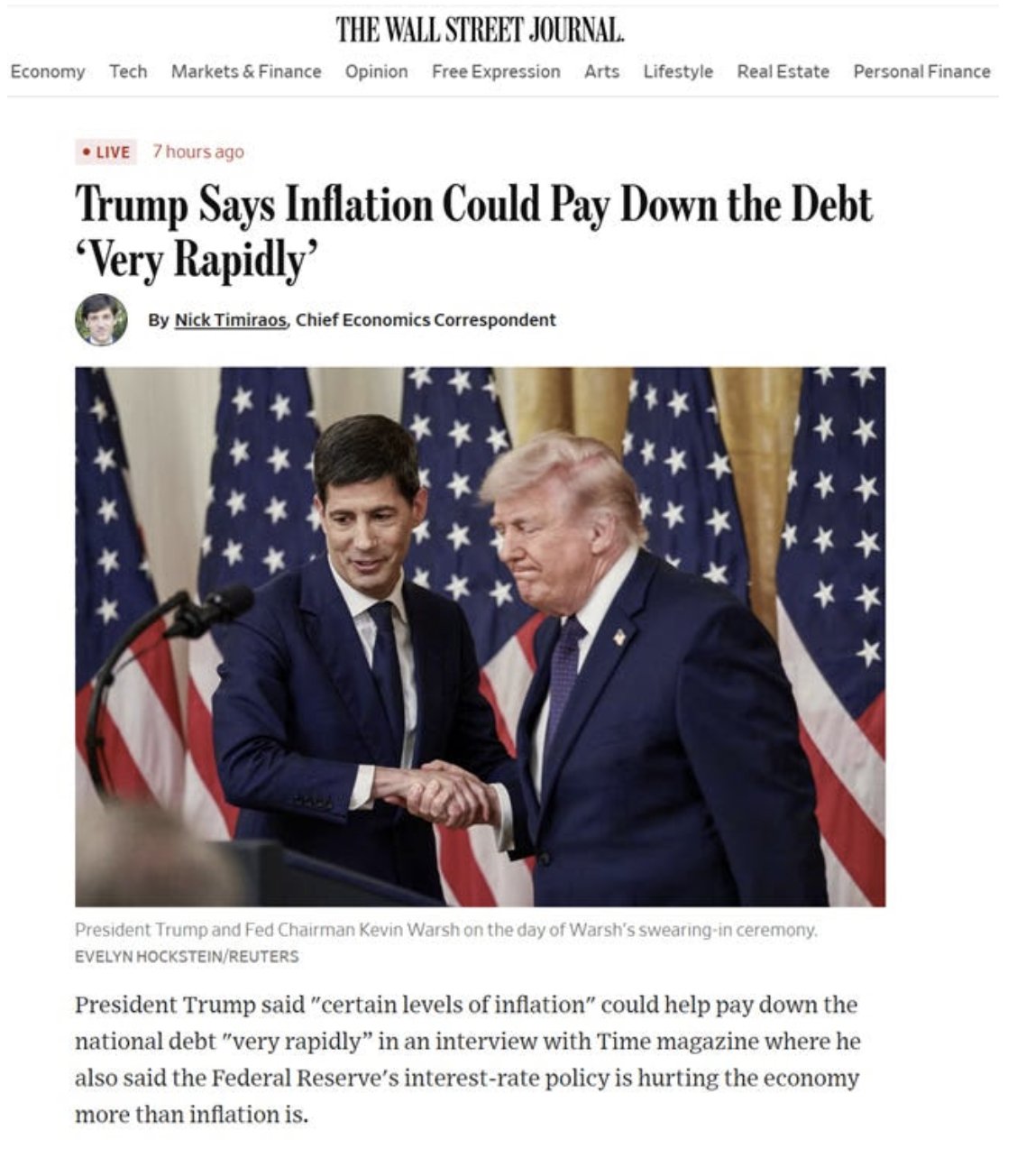
This week, President Trump told Time that “certain levels of inflation” could pay down the national debt “very rapidly.”
He’s right about one thing. Inflation shrinks the debt in real terms.
But somebody eats the loss.
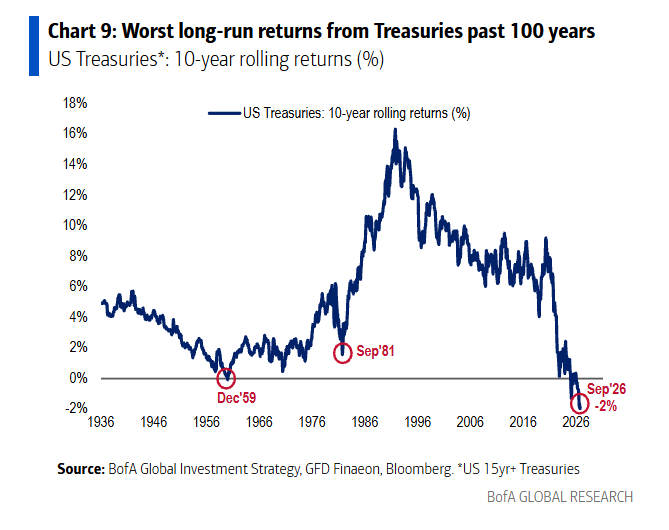
Long-dated Treasuries now show a 10-year rolling return of negative 2%. The worst run in 100 years.
So who’s holding the bag?
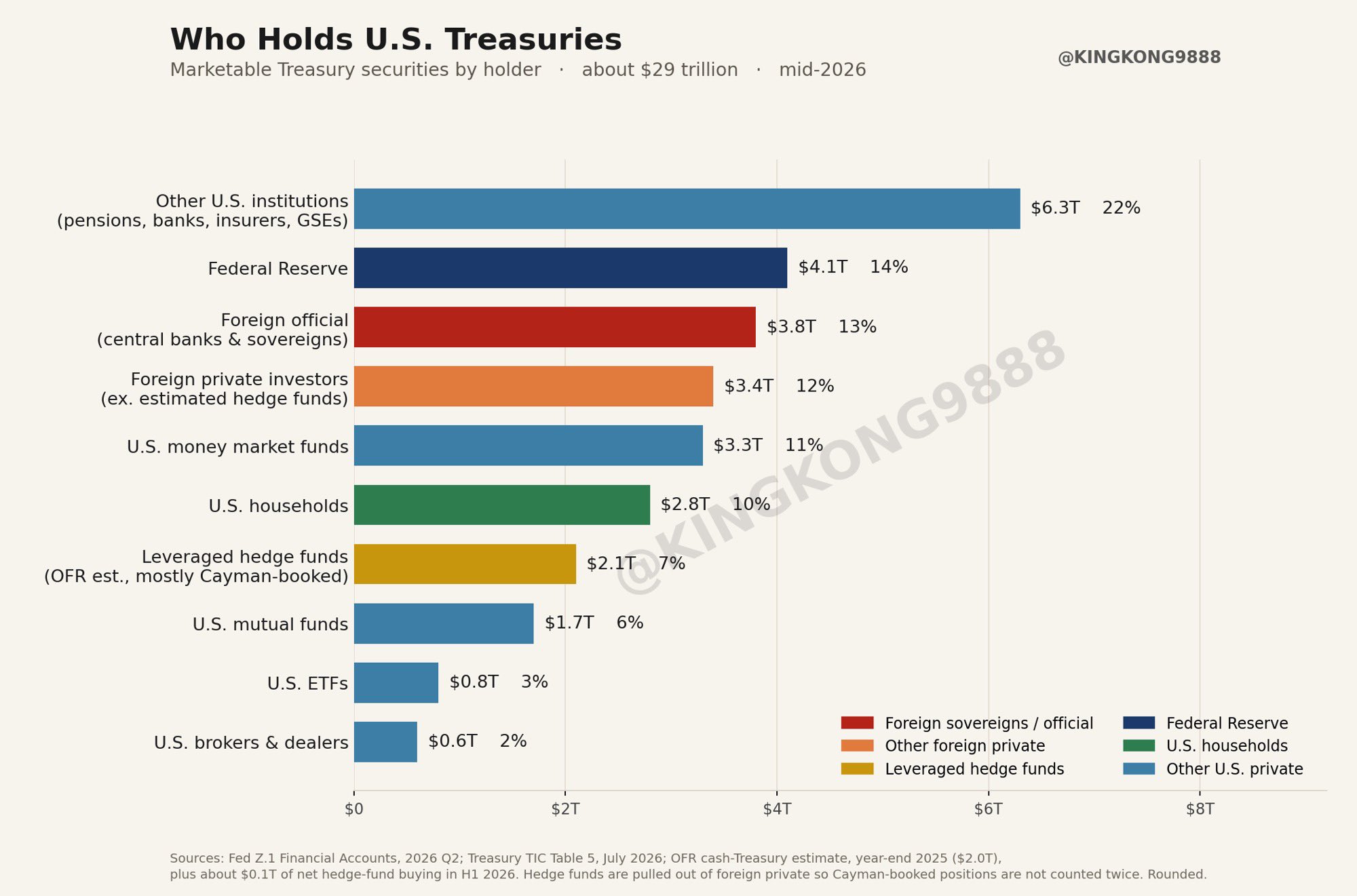
Pensions, banks, insurers and the GSEs hold $6.3 trillion, about 22% of the market. That’s retirement cheques and insurance premiums.
Households hold another 10%. Money market funds, where average Joes like you and me park cash, hold 11%.
And the Fed owns 14%, bought with money it created from nothing.
Inflation doesn’t pay down the debt. It downloads it onto the people who saved…
So what does a saver do?
Stop lending to a government that plans to repay you in cheaper dollars.
Hold part of your savings in something Washington can’t print. Physical gold and silver, in your own hands, bought at a fair premium.
The Dollar Collapse Playbook lays out how to size that position, what kind of bonds to hold (and what to sell), and where to buy it.
Have a great Sunday!