Written by Bryan Lutz, Editor at DollarCollapse.com
You may have already bought gold because you’re concerned about debt, currencies and a financial system that keeps finding new ways to borrow against tomorrow.
Then markets get shaky, gold falls, and someone announces that your insurance doesn’t work.
Before moving on, it helps to understand who’s selling, and why.
An investor facing a margin call has an immediate problem. Investments bought with borrowed money have fallen, and the broker wants more collateral. So, the investor needs cash, regardless of what they think gold will be worth next year.
And then, gold becomes the go to sale item (since it’s not earning interest or rising with the inflation tide in the near future). That makes it useful in a crisis, including to people who want to make up for their losses.
Their need for cash can push down the price of something they’d otherwise prefer to keep.
We’ve seen this before.
During 2008, gold fell from $925.40 an ounce at the end of June to $712.30 on November 12, a decline of about 23%. A World Gold Council report filed with the SEC describes investors selling gold to meet redemptions and margin calls as dollar funding became scarce.
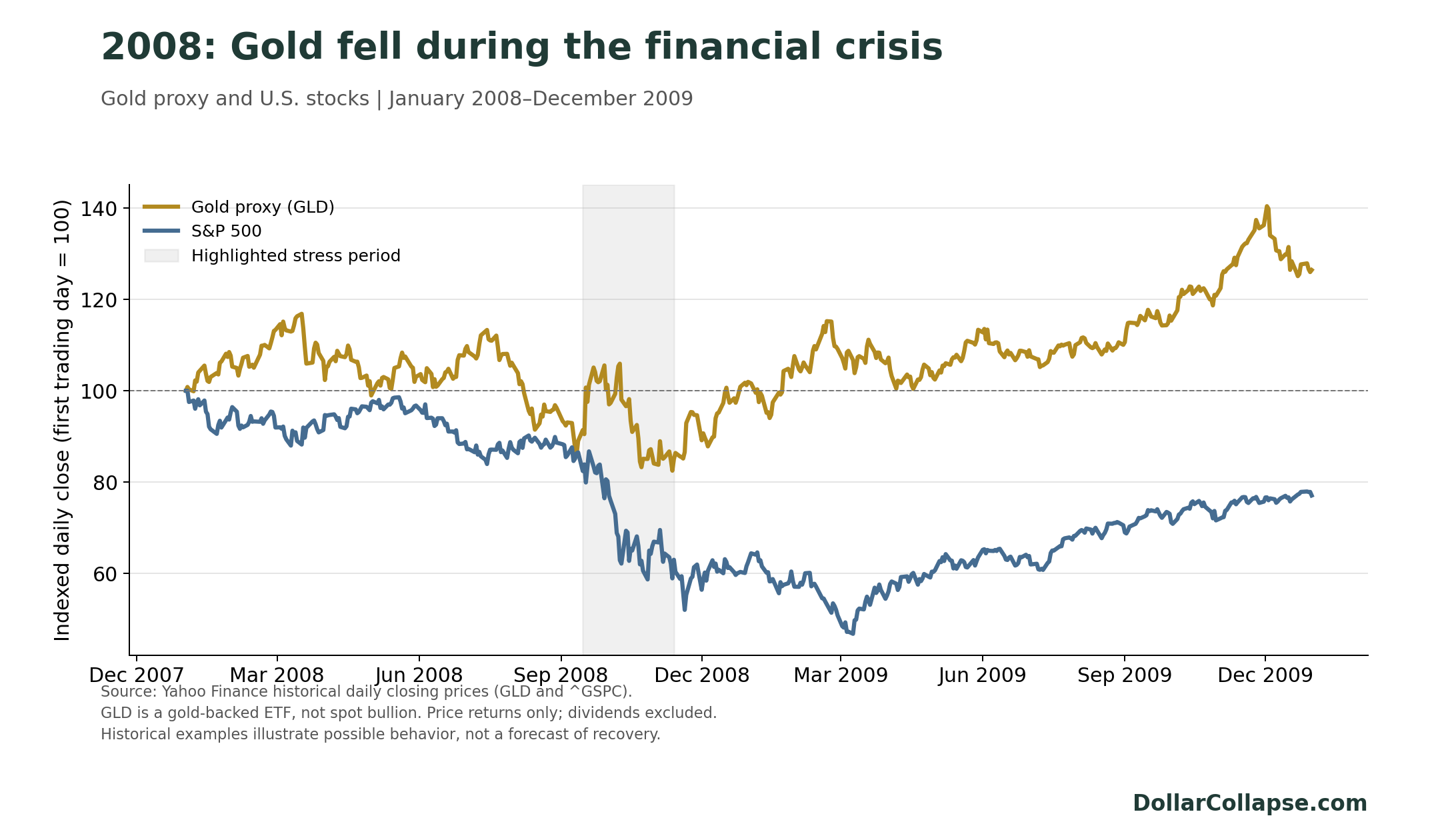
That selling didn’t mean the banking system had suddenly become sound. It meant investors were trying to survive its problems.
Gold subsequently recovered enough to finish 2008 with a 4.3% gain, measured using the LBMA gold price, according to the World Gold Council. The year-end result concealed a rough journey.
A similar scramble returned in March 2020. As the pandemic spread, investors sold assets to raise cash, including gold and even U.S. Treasuries.
The World Gold Council’s first-quarter review reports that gold was down 7% for March at its trough before rebounding later that month. Rate cuts and extraordinary monetary and fiscal support helped its recovery.
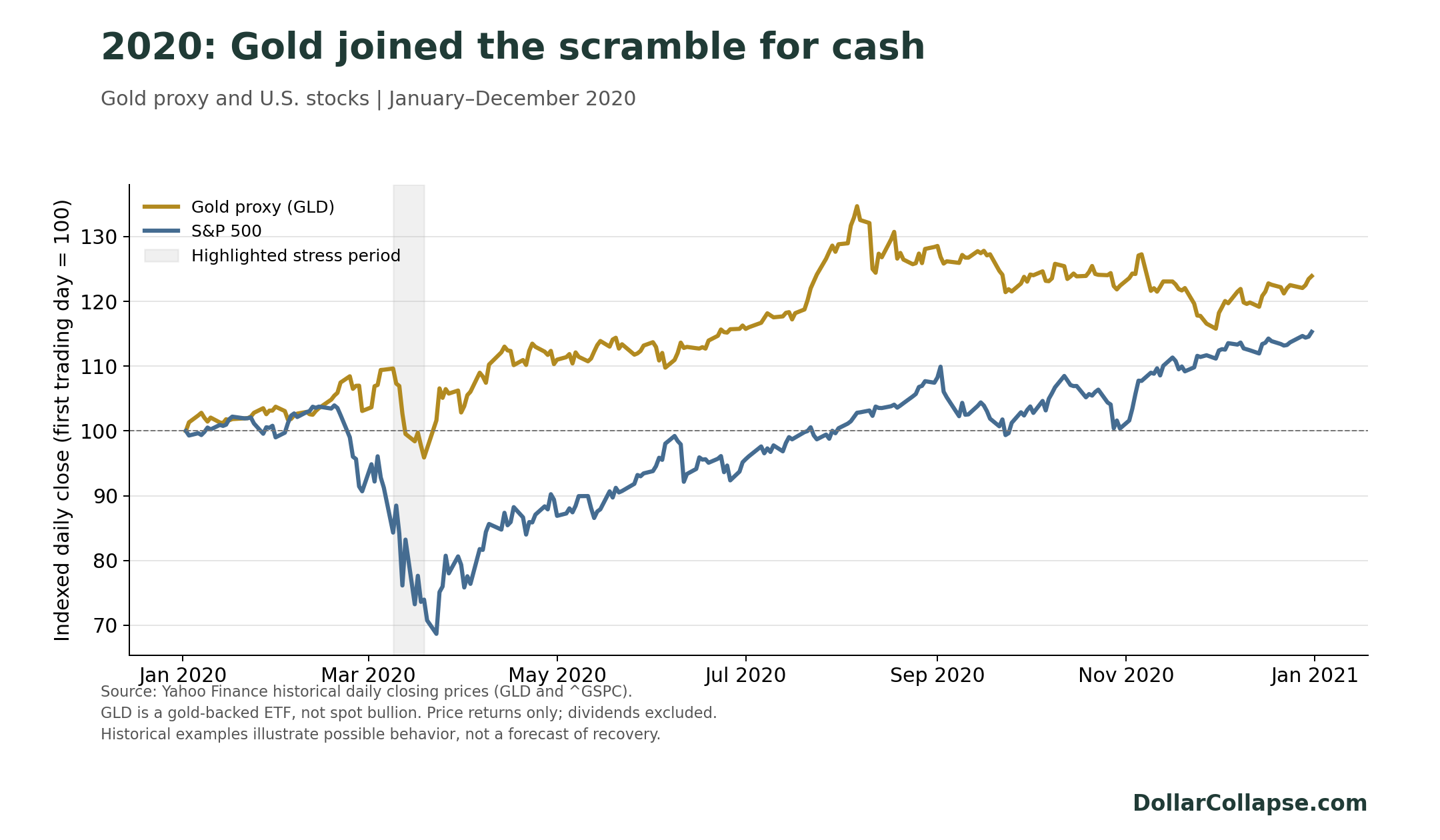
Those episodes explain how gold can fall during a crisis. They don’t guarantee a quick recovery from every decline. Higher real interest rates, a stronger dollar and weaker demand can also weigh on it.
But a lower gold price doesn’t settle the larger fiscal questions.
U.S. gross federal debt stood at 121.2% of GDP in the second quarter of 2026, according to Federal Reserve data. That measure includes debt held within the government as well as debt held by the public.
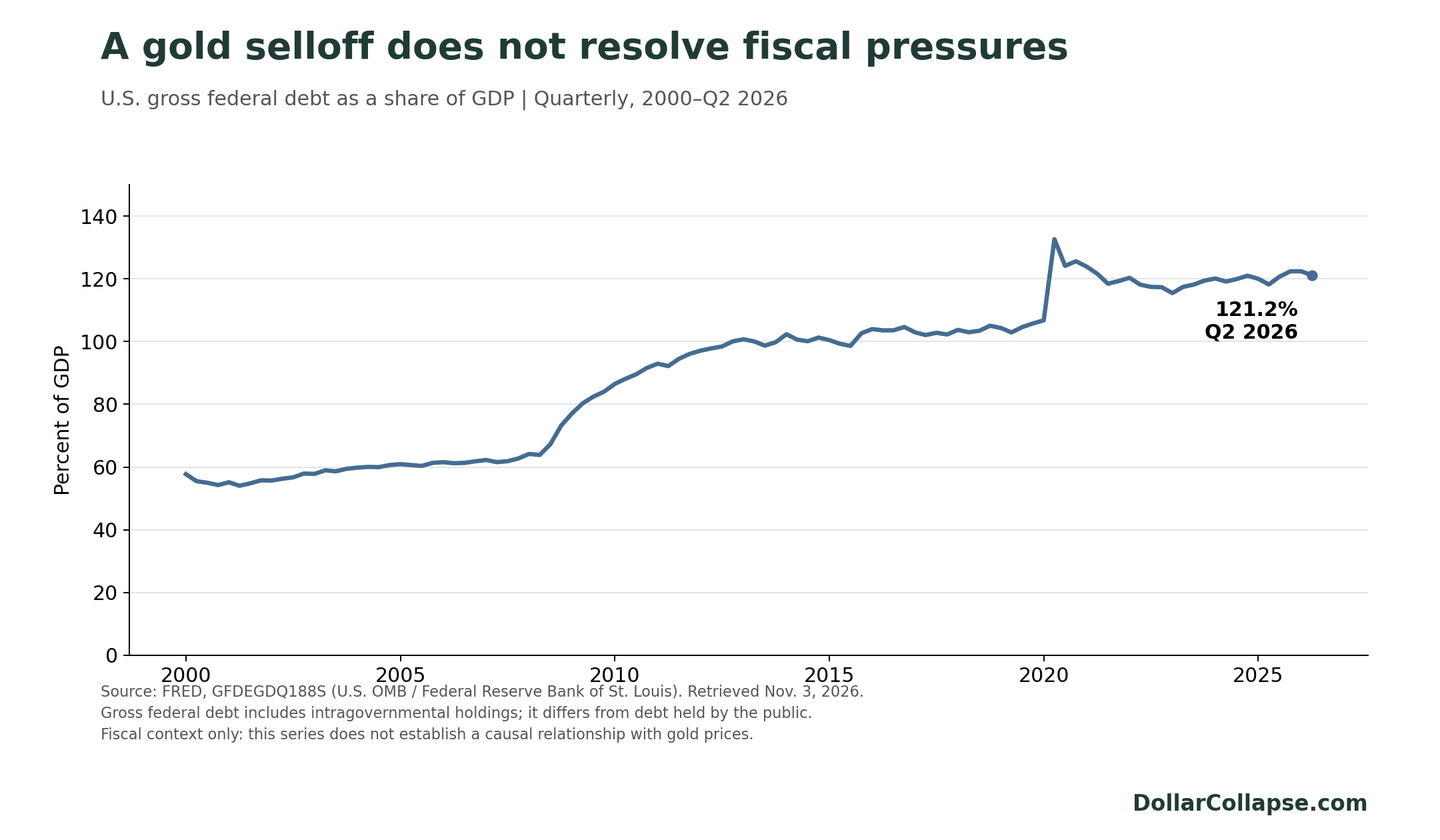
The ratio shows why concerns about government finances don’t disappear when bullion has a bad week.
So, we have to look beyond the price, and understanding that protection against long-term monetary risk can still come with short-term losses.