Despite the new Fed Chair going quiet, the cost of treasury debt going (rising yields), and gold getting sold off by retail investors, the fundamentals of our thesis are still intact.
John Rubino does a great job of revisiting those fundamentals, below.
Originally posted by John Rubino on his Substack:
The biggest challenge for aspiring long-term investors is the long-term part. That’s because Mr. Market is a manic/depressive who likes nothing more than torching paper profits via brutal corrections.
Gold and silver are obvious examples. After a phenomenal run in 2025, the metals have spent the first six months of this year in free-fall:
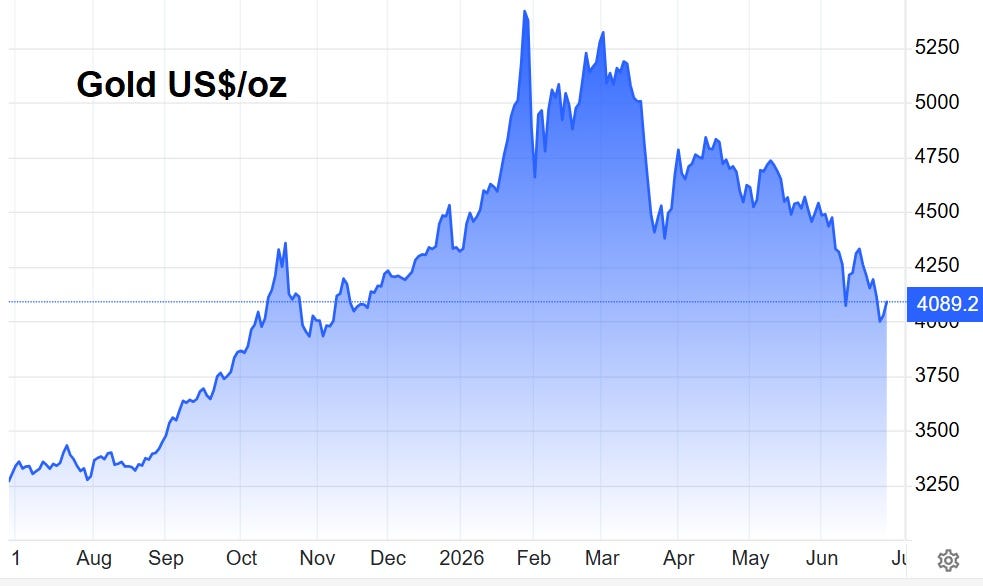
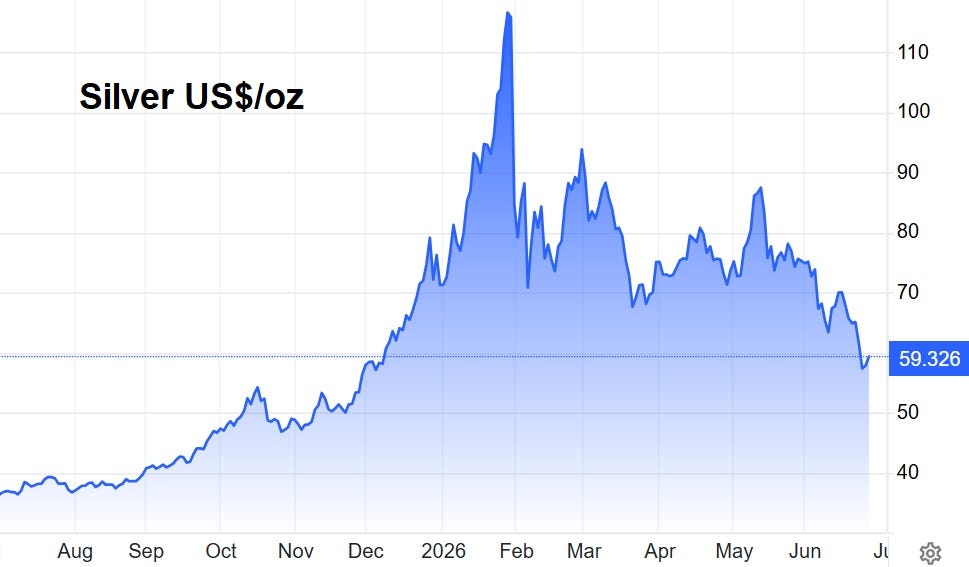
Ordinary Correction, Or New Bear Market?
The previous two precious metals bull markets (in the 1970s and 2000s) ended with millions of people buying aggressively at the top, only to lose their shirts in the ensuing multiyear decline. Could this be another of those?
Well, there is, believe it or not, a way to tell corrections from bear markets. It’s based on the premise that bull markets end when the fundamentals that made them possible change. If those fundamentals haven’t changed, then the bull market isn’t over.
Here’s a chart from the 1970s, when soaring inflation spooked the world out of dollars and into gold and silver. What do you notice about the monetary environment?
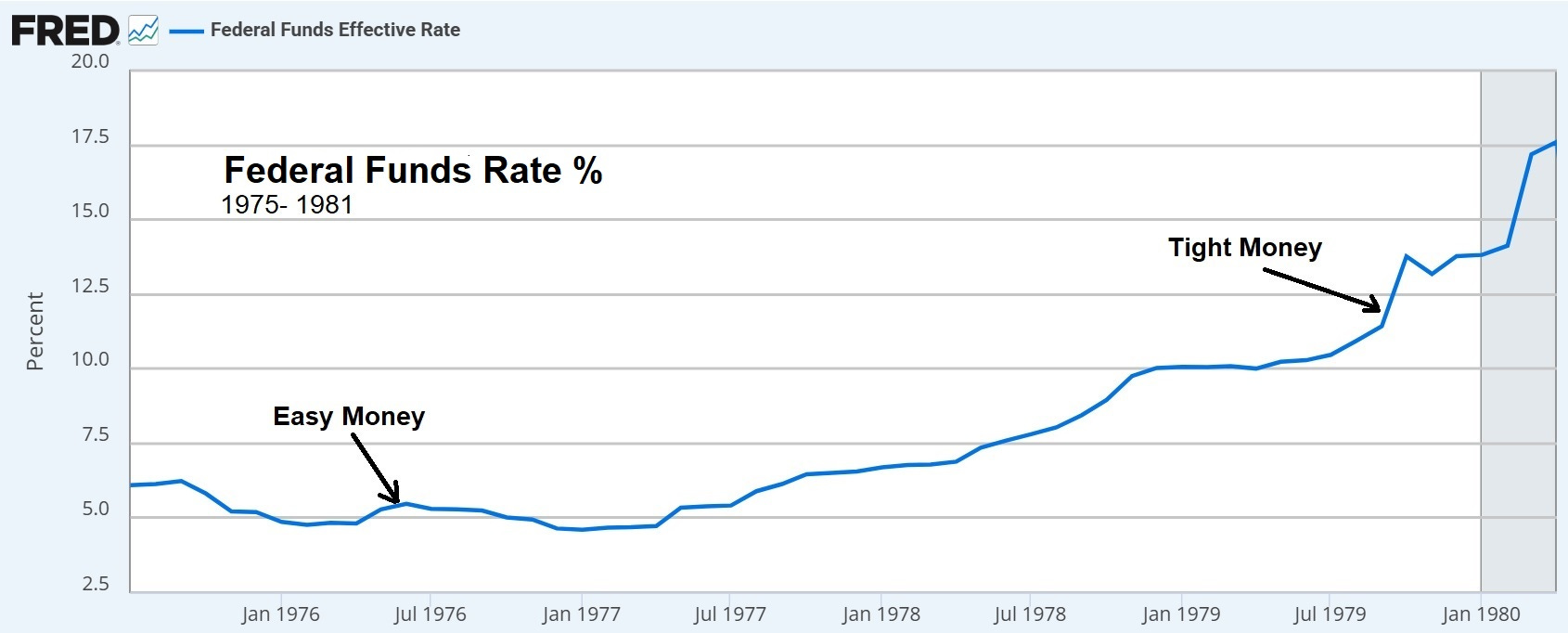
During the first half of that decade, interest rates — i.e., the cost of credit — were relatively low and stable, which allowed inflation to accelerate, which in turn was great for inflation hedges like gold and silver.
In the second half of the decade, interest rates began rising as the Fed aggressively tightened to combat inflation. By decade’s end, money was extremely, historically tight, which smothered inflation and eliminated the need for inflation hedges. Gold and silver, as a result, fell nonstop throughout the 1980s.
To sum up, easy money fueled a precious metals bull market, and when that went away, so did gold and silver.
What About Now?
No, for two reasons:
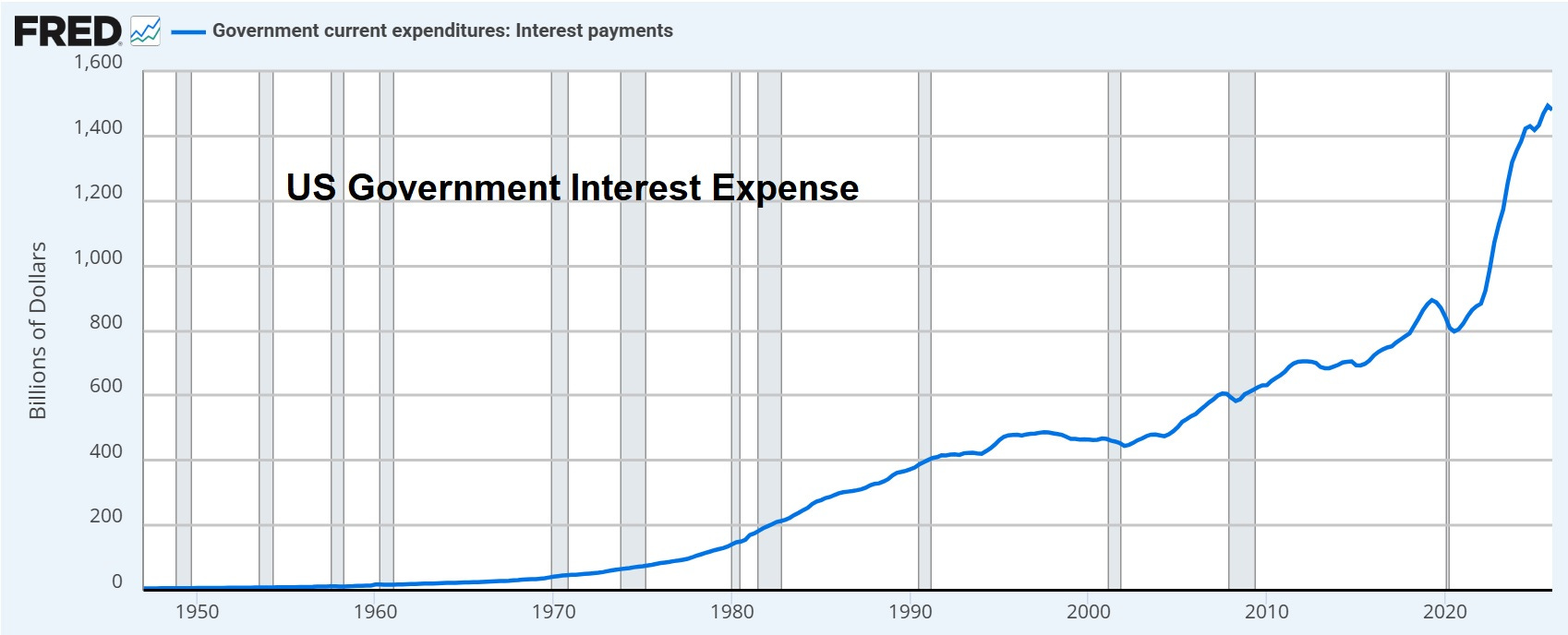
First, note the difference between the US government’s 1970 balance sheet (virtually no debt) and today’s $40 trillion:
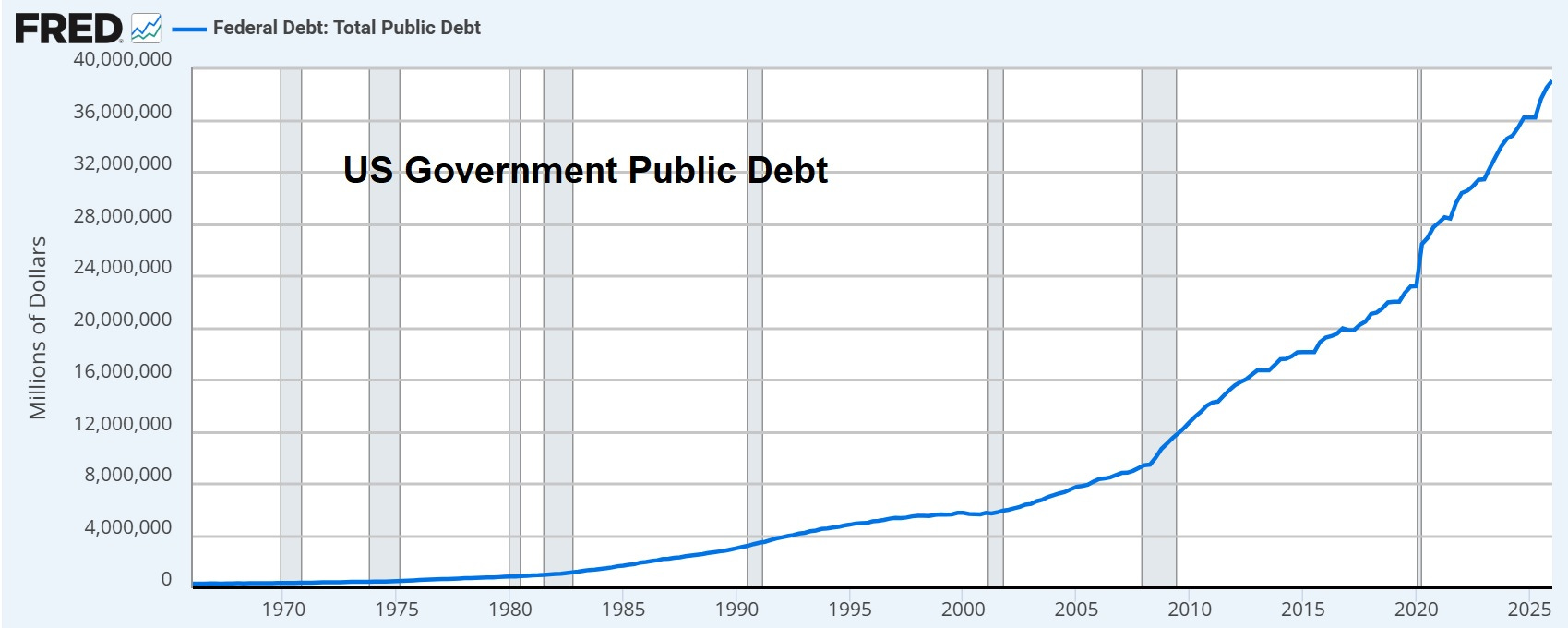
Then note the cost of servicing this debt at current interest rates:
Higher Rates Are Impossible
Raising interest rates to counter inflation in today’s overindebted world would be catastrophically costly for overindebted governments (and businesses and individuals). So a 1970s-style monetary tightening is out of the question. Even maintaining interest rates at today’s level will eventually blow up the financial system.
This leaves governments with no choice but to cut interest rates to lower debt service costs. In other words, they have to inflate away their debts if they want to avoid another Great Depression. So monetary policy will be expansive until the fiat currency system fails and is replaced by something else.
In the meantime, the fundamentals — low rates, easy money — that have driven this century’s gold/silver bull market are unchanged. So the bull market still has legs.
And The Miners…
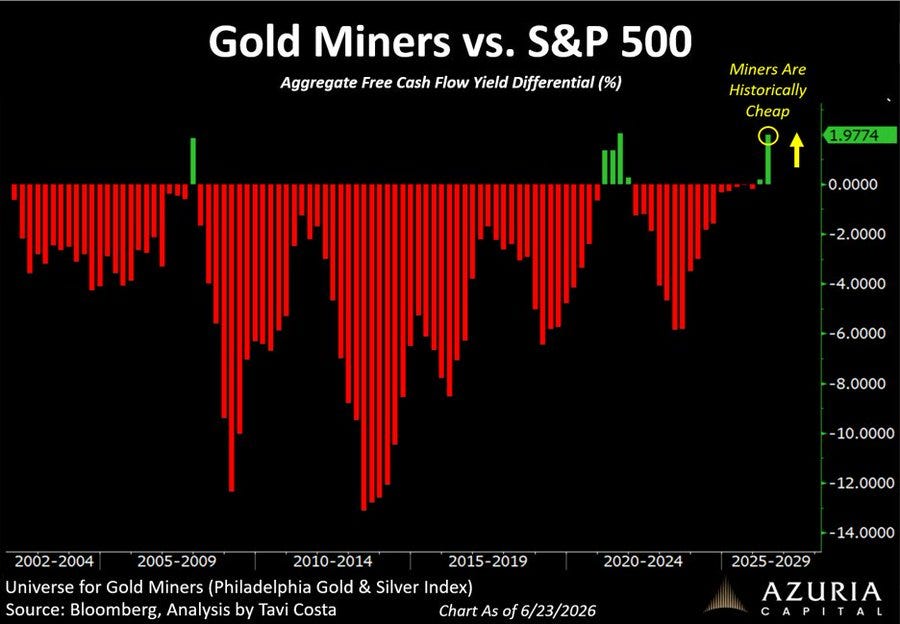
Meanwhile, most of their shares are down by 50% or more from recent highs. Time for a little bottom fishing?