Written by Bryan Lutz, Editor at Dollarcollapse.com:
AI can do a lot for you, but what does it do, really?
It can write code, answer questions, and help businesses work faster, but none of that pays a lender until somebody turns it into cash. It’s the oldest playbook in the book. The thing you’re selling must create value for a specific person, and right now, for the majority of businesses, that value is purely ambiguous. They can’t pinpoint exactly where money is getting saved, or how much leverage AI’s assistance is creating in their institutions labor force.
So running an AI business like Meta, Anthropic, and OpenAI is becoming extremely expensive. Especially as they compete for growth – to carve out a market share in the industry.
Reuters reports:
CoreWeave bond rout tests market’s math on AI buildout
“A sharp decline in CoreWeave’s (CRWV.O), opens new tab bonds this week is emerging as a test of investors’ willingness to keep financing the massive buildout of AI infrastructure, as rising borrowing costs and scrutiny of debt-funded expansion hit the sector.
Analysts and portfolio managers said the selloff in the data center operator’s debt carries more significance than a concurrent rout in its shares because it may signal a broader reassessment of the risks tied to financing AI projects that may take years to generate revenue.CoreWeave bonds issued in June at a yield of 9.675% have plunged in value, sending their yield to 15% this week.“CoreWeave is absolutely the canary in the coal mine” for a market segment that is coming under more stress, said Max Frumes, global head of distressed and leveraged finance at 9fin, a fintech corporate credit data and analytics company.“This is going to be a turning point in the pricing and availability and structure of credit that’s supporting the AI boom,” said Frumes, who believes that other AI-linked debt will follow CoreWeave into distressed territory. “It’s going to get more expensive. There will be a lot more scrutiny and probably some pushback from investors.”CoreWeave shares fell 15.1% from Monday’s open through Thursday’s close, despite a 6% gain on Thursday after a vote of confidence from partner Nvidia NVDA.O.”
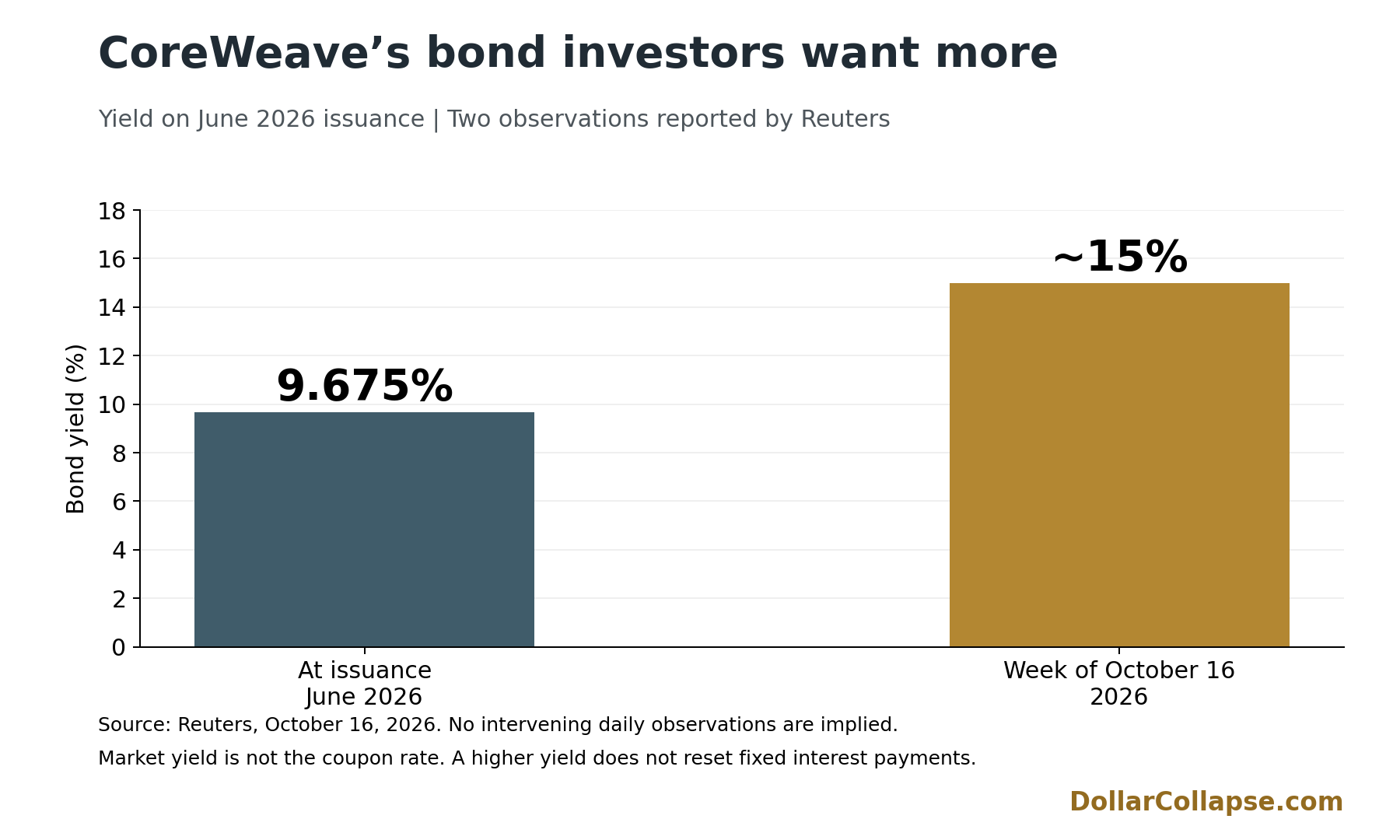
A rising market yield doesn’t increase the fixed interest payment on an existing bond. It means the bond’s price has fallen. What it does do is warn that raising fresh money, or replacing maturing debt, could become much more expensive.
For example, think about what an AI infrastructure company must pay for before it collects much revenue:
Chips, buildings, electricity, cooling, and network equipment. Construction can run late. Customers can negotiate lower prices. Equipment can lose value as newer chips arrive.
Yet, the cost to service that debt still has a payment schedule. The lender comes a knocking…
So of the larger technology companies have more room to absorb those costs, but some don’t. Take a look at their cash flow. It exposes which companies are more vulnerable than others.
By the end of Q2 this year, Microsoft generated $55.4 billion in operating cash and spent $35.8 billion on property and equipment. In contrast, Meta generated $31.9 billion, and spent $30.1 billion on that same cash-spending measure.
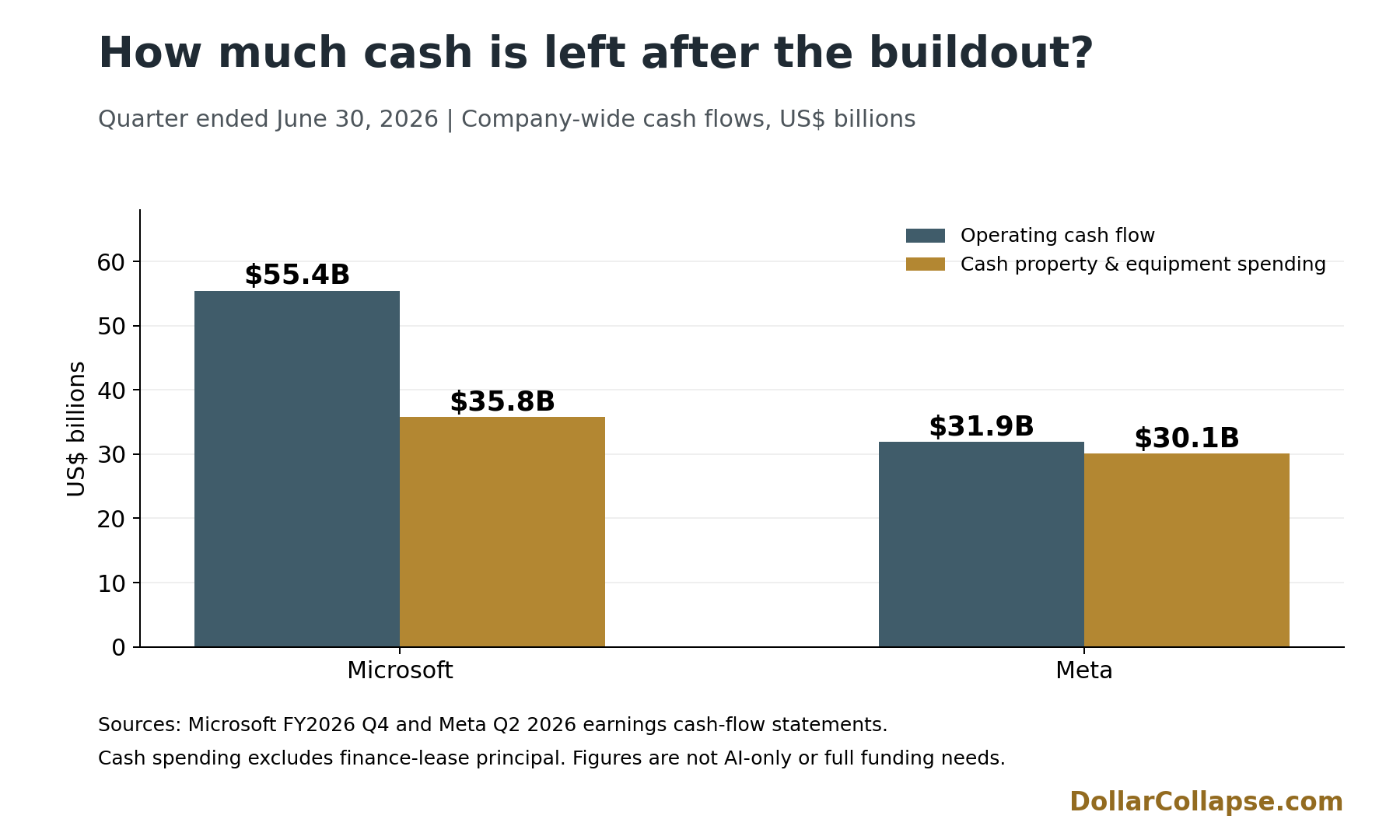
Microsoft had a much larger cushion. Meta was already spending nearly everything its operations brought in, before finance-lease principal payments and dividends.
By the next quarter, Meta’s own earnings release stated:
“Cash flow from operating activities was $32.79 billion, and free cash flow was negative $2.12 billion.”
The debt market is paying attention.
Reuters reported on October 22 that Meta’s five-year debt-insurance spread rose 7.6 basis points to 114.79—a record. That measures the cost of protection against default, rather than the interest Meta pays.
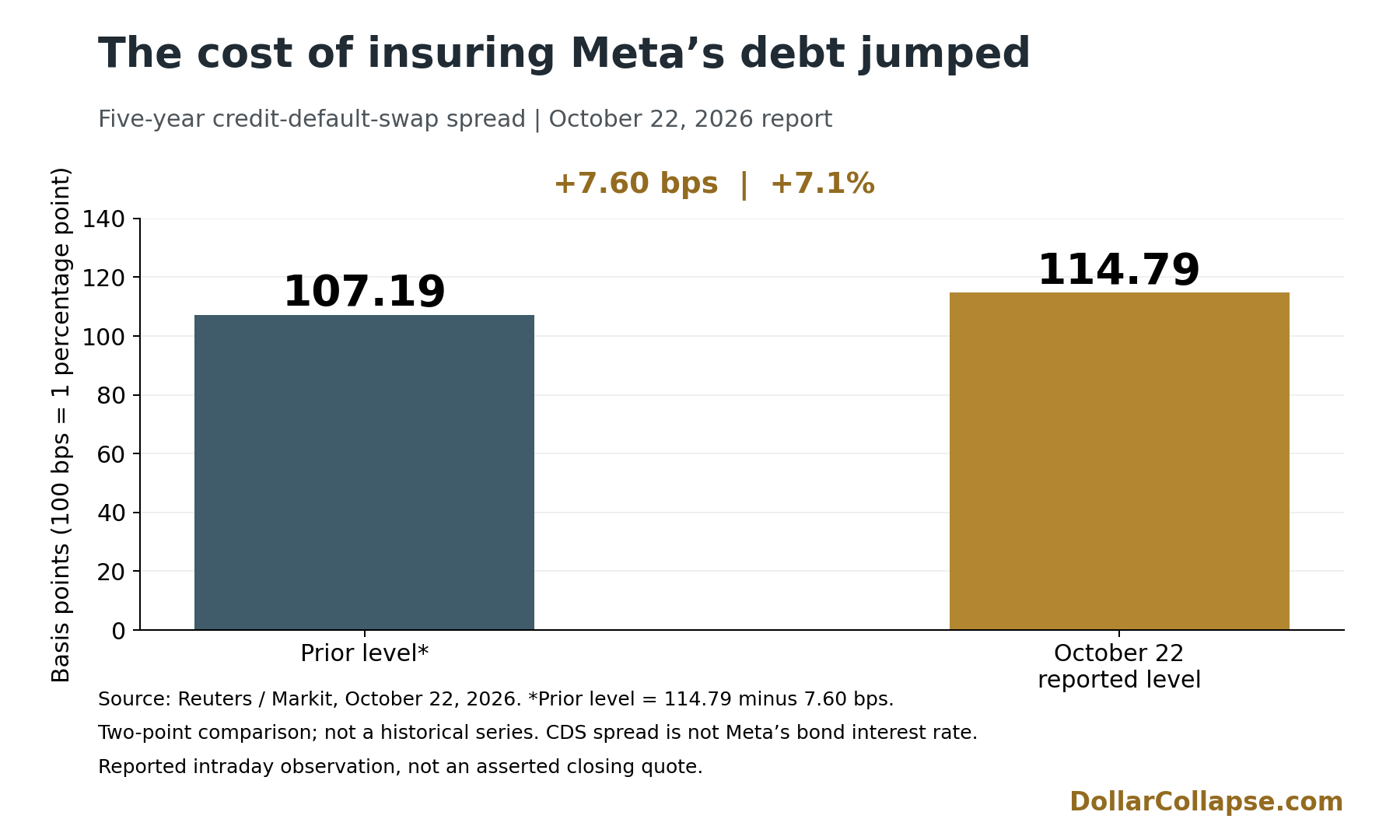
The pressure on borrowing terms was visible before this earnings announcement.
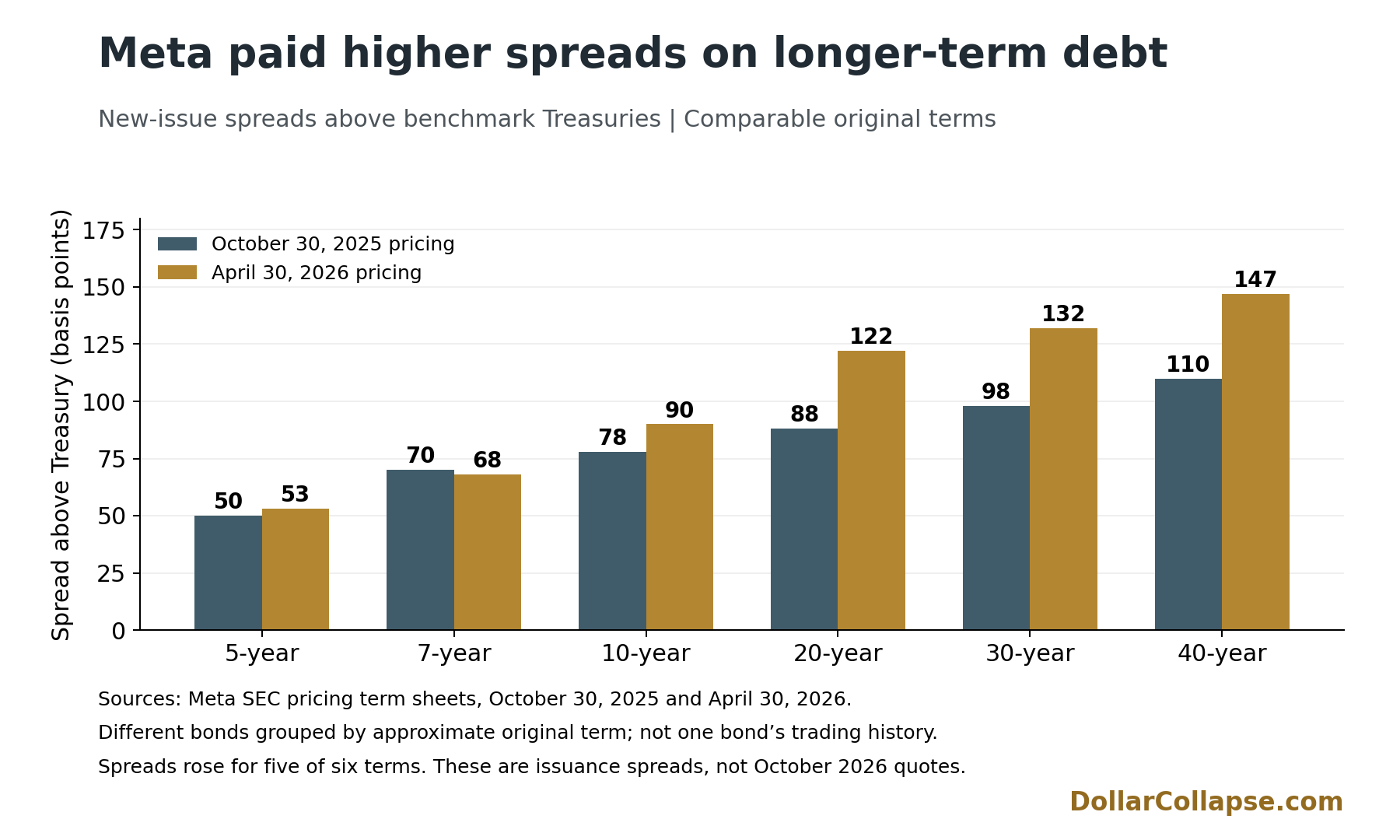
Meta’s official pricing sheets from October 2025 and April 2026 show higher spreads above Treasury rates for five of six comparable maturities. On 30-year debt, the premium increased from 98 to 132 basis points.
Meta still has an established advertising business and reported $82.45 billion in cash and marketable securities. It has far more financial room than a vulnerable infrastructure borrower. But lenders are demanding more compensation. If that continues, financing the next stage of expansion becomes harder to justify. AI doesn’t have to fail for investors to lose money. It only has to deliver cash slower than the debt requires.