The Pentagon’s 2027 budget request is $1.5 trillion. That number does not include the war the United States is currently fighting in Iran.
Last week the Treasury issued $524 billion in securities. The Federal Reserve’s balance sheet expanded again. Annual interest on the federal debt has crossed $1 trillion and is now larger than defense spending.
Every American war since 1861 has been funded the same way. It hasn’t changed in 165 years.
Here’s Randolph Bourne, writing in 1918, the year he died of the Spanish flu at age 32 with the manuscript unfinished:
“War is the health of the State. It automatically sets in motion throughout society those irresistible forces for uniformity, for passionate co-operation with the Government in coercing into obedience the minority groups and individuals which lack the larger herd sense.”
That line has been quoted by many libertarians for a century. Murray Rothbard built much of his early work on it. What gets less attention is what the line actually means in practice.
Bourne was describing the political mechanism. Federal governments acquire power during wartime that it does not acquire during peace. Citizens defer. Critics are silenced. Then resources flow to the center. The institutional changes installed during the emergency always outlast the emergency.
What Bourne did not focus on, because he died before he could write it, was the monetary mechanism. That came later, from Rothbard. And it is the part of the equation we are watching unfold in real time.
What we’re actually looking at
In What Has Government Done to Our Money?, Rothbard makes the precise observation that explains how Bourne’s herd-instinct State pays for itself:
“The American continentals, the greenbacks and Confederate notes of the Civil War period, the French assignats, were all fiat currencies issued by the Treasuries.”
Every emergency in monetary history has been the same emergency. The State needs to spend more than it can tax… So, it prints, and the bondholders pay.
The Civil War is the cleanest case in American history.
When Lincoln signed the Legal Tender Act in February 1862, the United States issued its first non-redeemable paper currency in the history of the Republic. The greenbacks circulated as legal tender for everything except customs duties and interest on federal bonds. By the end of the war, the Union had issued roughly $450 million of them, and they had depreciated to about 35 cents on the gold dollar at the worst point of the conflict. The Confederacy issued its own paper, in larger volumes relative to its economy, and saw it depreciate to nothing. Both sides debased their currencies. The North’s institutional infrastructure, the National Banking Acts of 1863 and 1864, outlasted the war by fifty years and became the Federal Reserve.
The institutional infrastructure installed to fund the Civil War is the same infrastructure funding the Iran War in 2026.
Every American war since has run on the same fuel.
World War I: federal expenditure rose 2,454% in three years. The money supply rose 60% from 1913 to 1918 against 13% GDP growth. World War II: federal debt went from 44% of GDP in 1940 to 119% in 1946. Vietnam: Lyndon Johnson tried to fund both the war and the Great Society without raising taxes. Gold reserves drained until Nixon closed the gold window in 1971. Iraq and Afghanistan: financed off-budget through supplemental appropriations for two decades, $8 trillion in total cost per the Costs of War project at Brown University.
The pattern is not a pattern. It is a method.
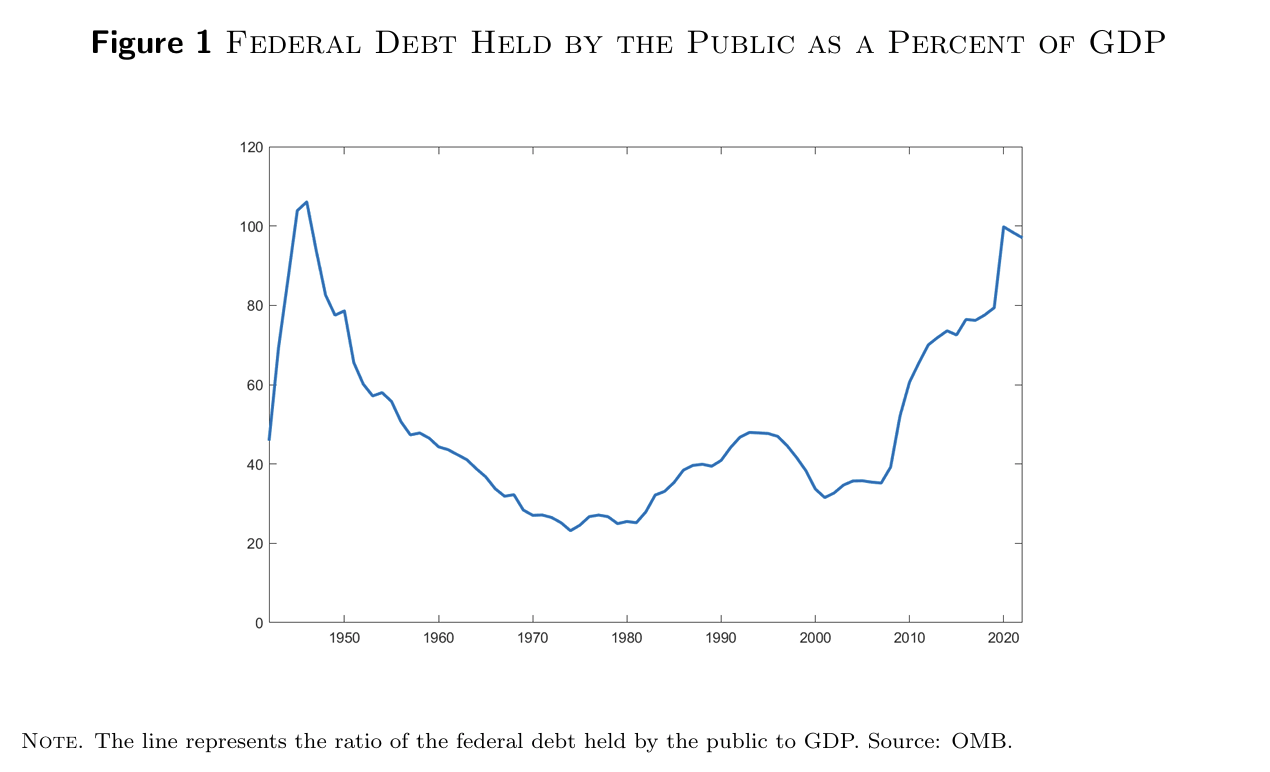
This week’s tape
Item 1. The Pentagon’s $1.5 trillion request, with the war removed.
The fiscal year 2027 Pentagon budget request is $1.5 trillion. Total U.S. national security spending including Veterans Affairs, the intelligence community, and Department of Energy nuclear programs is on track to exceed $2.5 trillion by 2027.
None of this includes the war in Iran.
That war is being funded through emergency supplemental appropriations and off-budget mechanisms, the way Iraq and Afghanistan were funded for two decades. The official top-line number understates the actual fiscal burden by hundreds of billions per year, by design.
Item 2. $524 billion in Treasury issuance, in a single week.
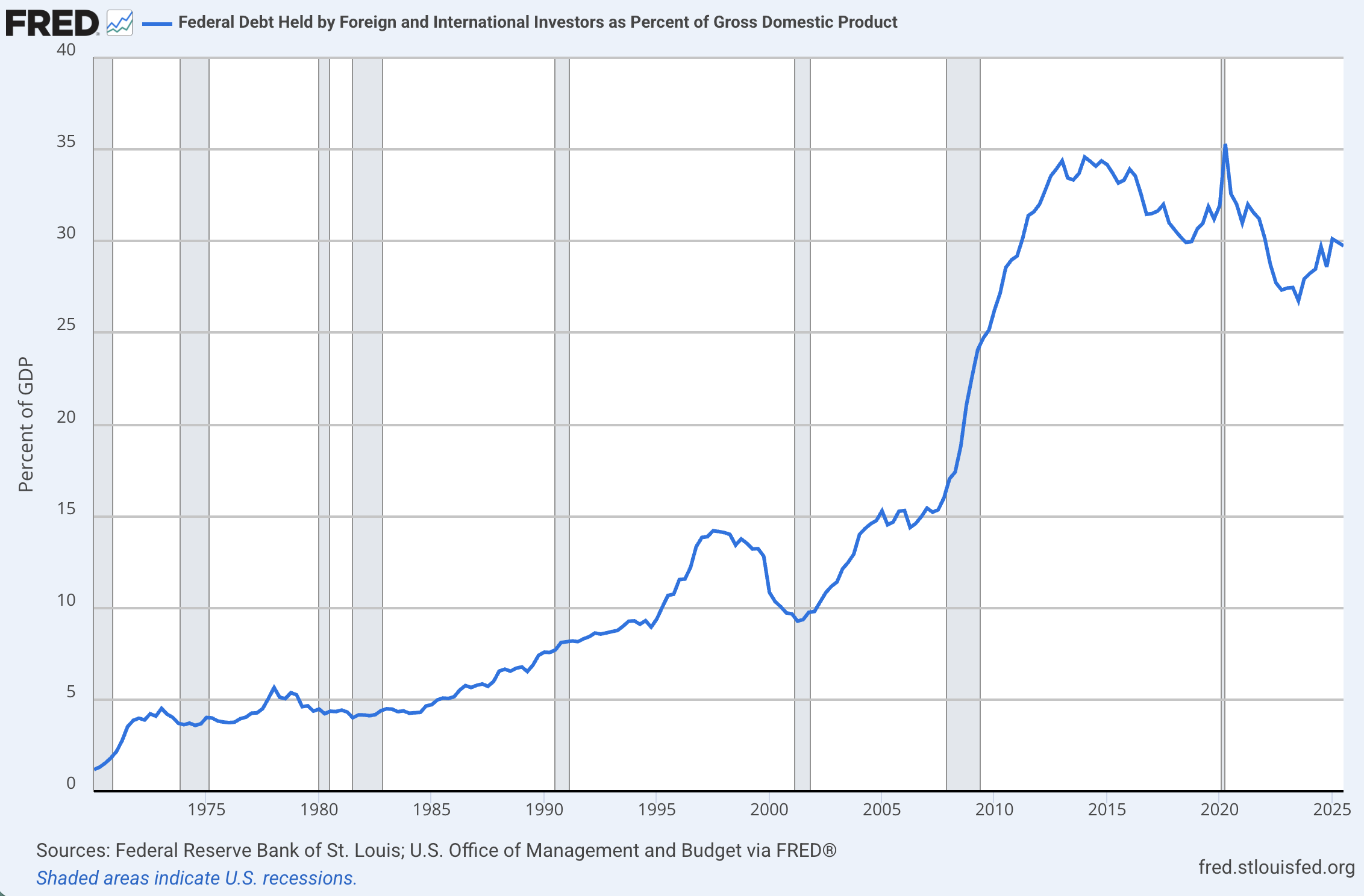
The U.S. Treasury sold $524 billion in securities last week. That is more than the GDP of Sweden. It is also more than the entire federal debt of the United States in 1975.
The marginal buyer is no longer foreign central banks. Their share of total Treasuries has fallen from 45% in 2014 to under 30% in 2026. The marginal buyer is now domestic money market funds and, increasingly, the Federal Reserve itself.
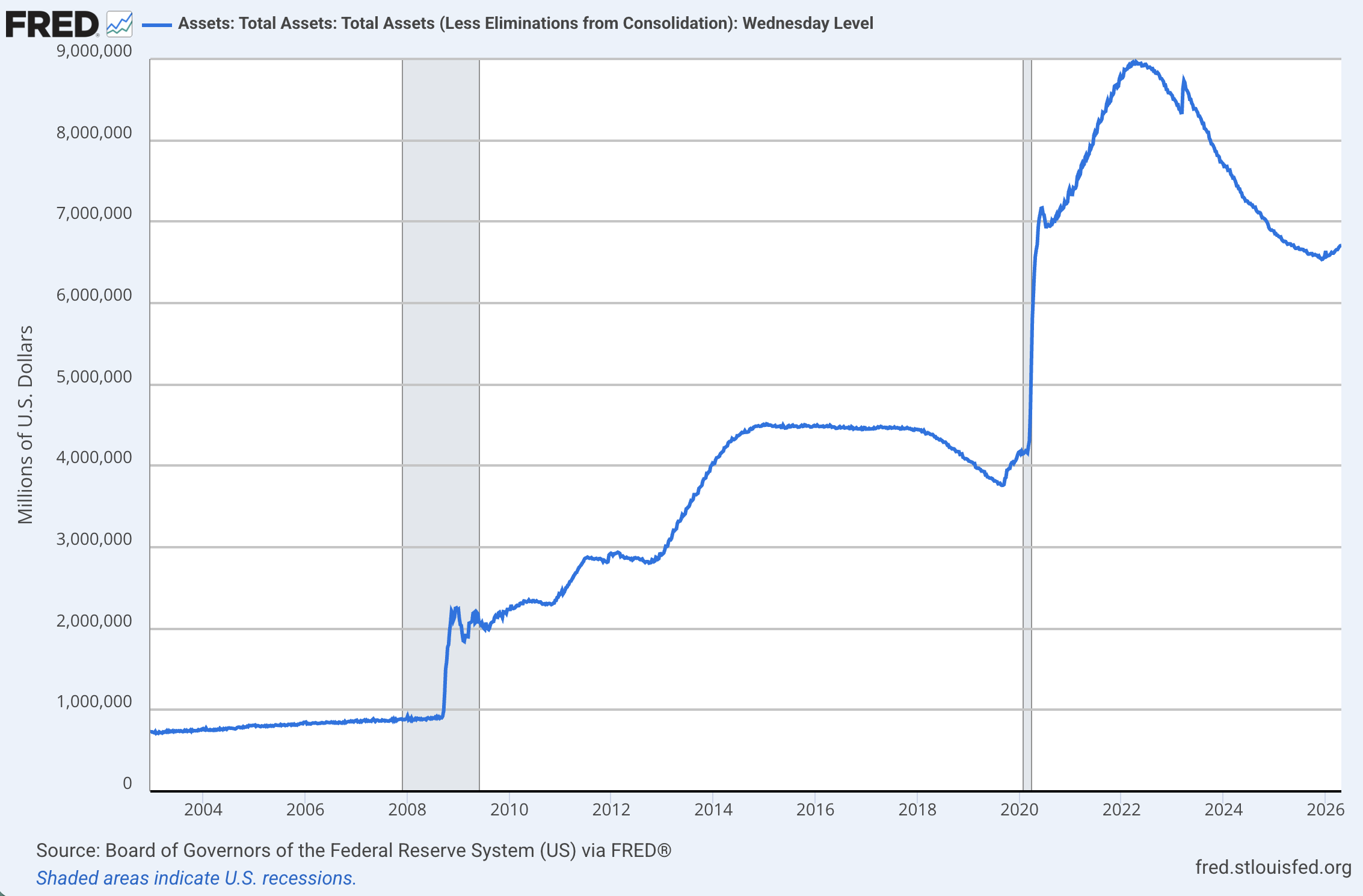
Item 3. The balance sheet is expanding again.
The Federal Reserve’s balance sheet is growing again. Not formally announced as quantitative easing. Not framed as a new emergency program. But the H.4.1 weekly release shows the holdings rising. The official line is “technical operations.” The practical effect is the central bank financing the Treasury’s deficit by buying its paper.
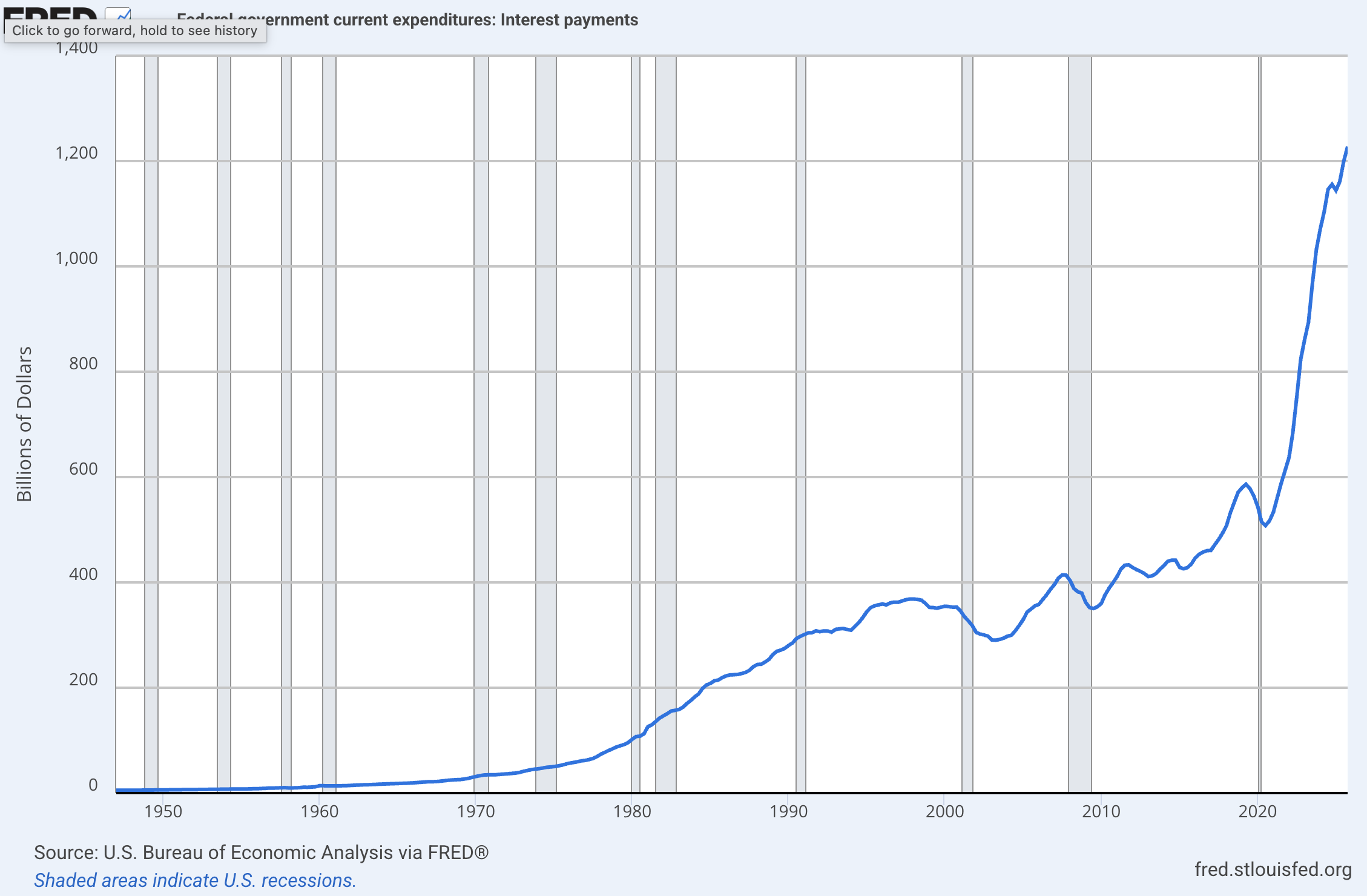
Item 4. Interest expense above $1 trillion.
Annual interest on the federal debt has crossed $1 trillion. It exceeded defense spending for the first time in 2024. The Congressional Budget Office’s baseline projects interest will reach $1.8 trillion by 2030 and surpass Social Security as the single largest line item in the federal budget.
Interest is non-discretionary. Congress cannot vote to reduce it. The only two ways to lower it are to pay down principal (which requires fiscal surpluses the U.S. has not consistently produced since 2001) or lower interest rates (which is the Fed’s domain).
Guess which one happens.
Temporary crises create permanent policy
Rothbard again, on the same point:
“Temporary ‘suspensions,’ however, are primrose paths to outright repudiation. The gold standard, after all, is no spigot that can be turned on or off as government whim decrees.”
Every major war has been declared a temporary monetary emergency. None of the suspensions have been temporary. The Bank of England suspended convertibility in 1797 to fund the wars against France. The suspension lasted until 1821. The U.S. suspended convertibility in 1862 to fund the Civil War. The greenbacks did not return to par with gold until 1879. Nixon closed the gold window on August 15, 1971, “temporarily.” It has been closed for 55 years.
Temporary, in monetary policy, means permanent.
The pattern
The mechanism the Union Army used to fund the Civil War in 1862 is the mechanism the Pentagon is using to fund the Iran War in 2026.
The names of the instruments have changed (greenbacks then, Treasury bills now). The central institution has been formalized (Federal Reserve in 1913, replacing the National Banking system that funded the Civil War).
The scale is incomparably larger, but the mechanism is the same.
When the State cannot tax enough and cannot borrow at acceptable rates, it prints. The bondholder takes the loss. The wage earner takes the loss. The saver takes the loss. The federal government takes the war.
What this means for the reader
The historical record on war finance is clear.
Bondholders lose.
Savers in the issuing currency lose.
Holders of hard assets do not lose.
Confederate bondholders ended the Civil War with paper worth zero. Union bondholders ended it with paper worth roughly forty cents on the dollar in 1865 prices. Anyone holding gold ended it with gold.
Every American war since has produced the same hierarchy of outcomes. World War I bondholders watched the dollar lose half its purchasing power by 1920. World War II savers watched the dollar lose another 80% of its purchasing power between 1940 and 1980. Iraq and Afghanistan bondholders are watching the dollar lose 25% of its purchasing power since 2020 alone.
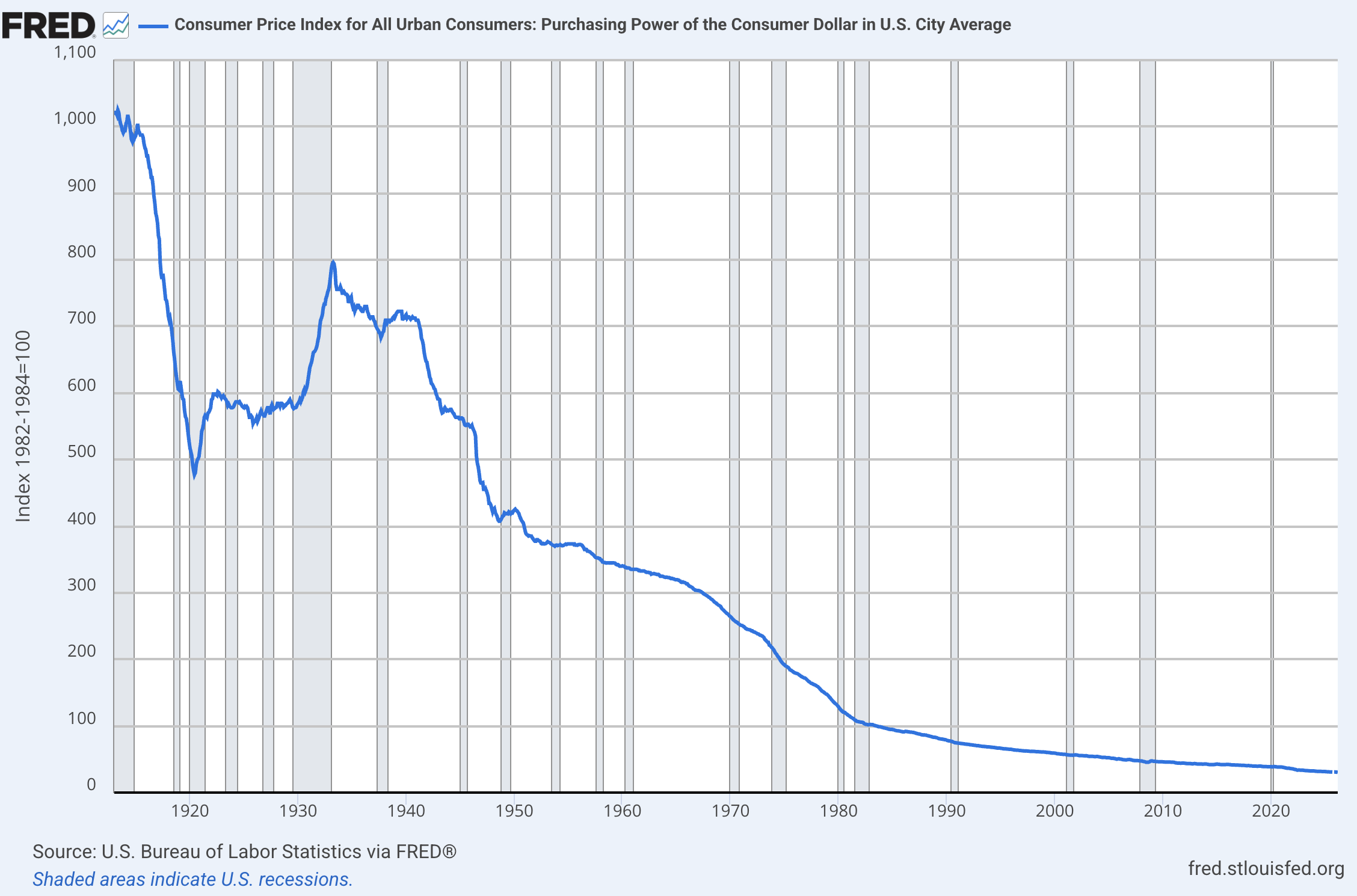
Every fiat war ends with the bondholder paying for it.
The End…
Bourne wrote that war is the health of the State, but he died before he could finish the essay.
What he saw in 1918 is what is on the tape this week. A federal government that grows without limit during conflict. A monetary apparatus that finances that growth without asking the taxpayer’s permission. A bondholder who is told, every time, that the suspension is temporary.
Those that win in this situation are the ones holding hard assets.