
Written by Bryan Lutz, Editor at Dollarcollapse.com:
Every Sunday I like to take time to reflect on what’s happened over the past week, and then share it with you…
So I get up, sit down and start typing.
Sometimes these thoughts end up being about life, other times they are on gold, geopolitical issues effecting the markets, or the economy.
Here are three thoughts for this morning:
1. The Gold Rush is here. Costco has finally put a “purchase limit” on gold bars, but that hasn’t stopped them from placing salespeople in the aisles.
This video surfaced yesterday on the Dollarcollapse.com twitter feed.
It features a Costco salesperson in an aisle hawking gold bars to passerby’s.
Online is a different story.

There are hard limits on buying physical gold.
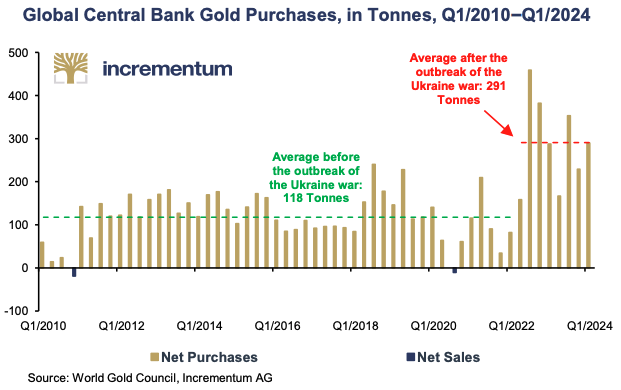
So you know, scarcity on physical bullion has only just begun.
Yet, it’s not your neighbour you should be racing against.
It’s much bigger players.Not the Elite.
It’s Central Banks.
2. Just a warning, if you’re a regular book buyer off Amazon. Watch out for low-quality AI written books that offer nothing more than you could find on the school of YouTube. Here’s the best kind of books to buy AND spend your time reading.
I say this because on Thursday I started writing an email series called “Essential Collapse Skills” where I mention how important it will be to learn new, marketable skill sets.
You may be searching Amazon for something like this right now.
And, you may have already considered a few titles.
I bought this one about 3 months ago because I wanted a textbook style quick read on boxing.
(Because there are not really any source texts on boxing out there.)
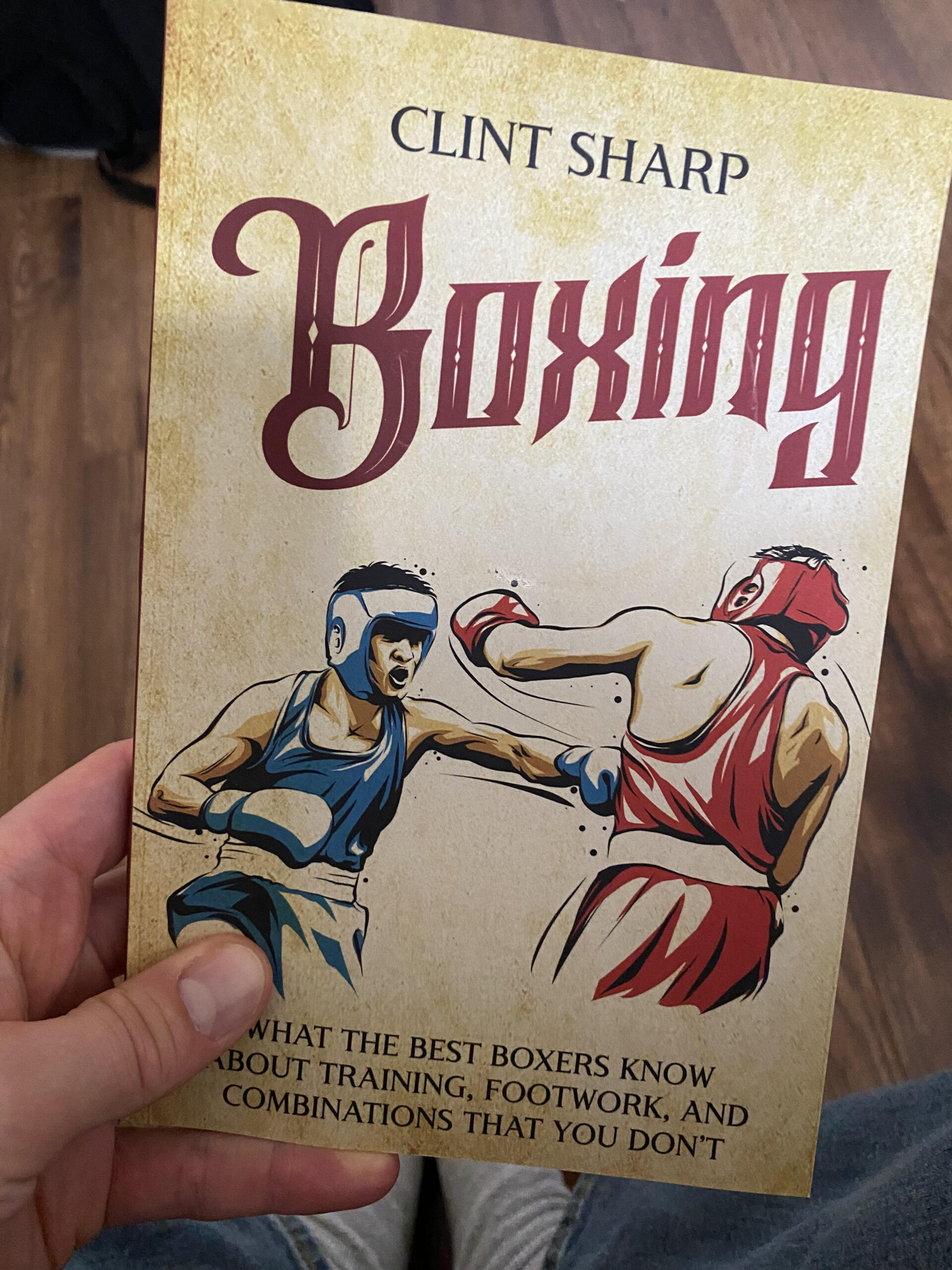
As it turned out, one of the first few chapters on “the history of boxing”, included paragraphs on the likely suspects: Mike Tyson, Muhammed Ali, and Sugar Ray Leonard.
All the usual…
The book was nothing that I hadn’t already learned in the gym, or from YouTube.
The knowledge gap was really just a confidence gap.
Here’s the secret the best boxers know that you don’t…
Master the basics. It’s all about the basics.
But here’s the point.
If you were to look for books to get yourself real help, the kind of stuff you can’t find from a simple query on ChatGPT, then be careful what you buy and take some time to ask yourself what you really need.
The best kind of books to buy are the source texts.
They are what I like to call “Supertexts.”
Basically, the original thoughts on specific topic like the Intelligent Investor by Benjamin Graham for value investing. Or, Economics in One Lesson by Henry Hazlitt.
3. Whether you are religious or not, this is an interesting observation by Substacker, Ryan Burges yesterday, and it’s actually another typical sign of mid-Fourth Turning vibes. Young Gen Z men appear to be leading a religious resurgence.
For the past several decades, the writing has been on the wall for Christianity in the West.
There is no shortage of statistics on the rise of popular Atheism.
And the funny thing is, many of these popular atheists, having experienced the rise of Islam in Europe, are now calling themselves “Cultural Christians.”
For example, a little over a year ago Richard Dawkins lamented over what Britain once was.
Then he declared himself a “Cultural Christian.”
So when this article by Ryan Burges on substack came across my desk, I had to share some of the curious results. Especially, since we are now in a Fourth Turning.
During Fourth Turnings, the last of about a 60 to 70 year cultural decline comes to a close and normative human relations are brought back into everyday life.
This happens after large amounts of uncertainty, chaos, and even war.
But for today, there is one cultural facet of Fourth Turnings we want to focus on. Families become more traditional, and organized religion becomes more popular.
Interestingly enough, this is starting with the men.
Ryan Burges reports:
The Religion of America’s Young Adults
“For decades, folks who study religion have always assumed that women exhibit higher levels of religious devotion and attachment. This Pew Research Report is worth perusing on that point.
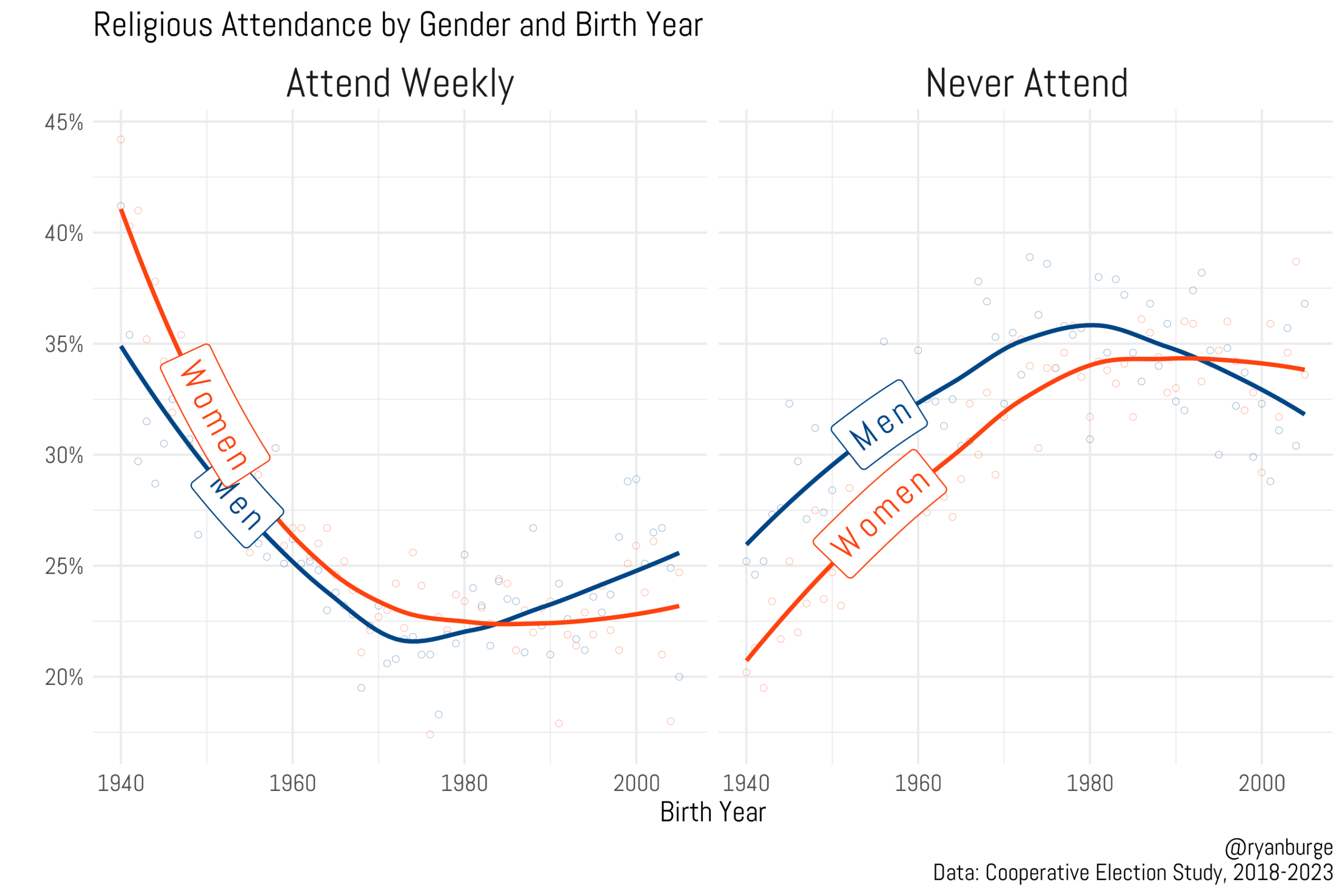
Let me show you two bits of analysis side by side. The first is a graph of the share of folks who reported attending religious services at least once a week. I divided the sample into men and women and then I calculated the share who were weekly attenders at the birth year level for the sample…
…young men are more religious than young women.”
And Happy Sunday.